The Big Bang Explained: How Our Universe Began
The Big Bang Explained: How Our Universe Began
The Big Bang theory is the leading scientific explanation for the origin of the universe. It describes how the universe expanded from an extremely hot, dense state roughly 13.8 billion years ago to the vast cosmos we observe today. This article explains the key concepts behind the Big Bang, the evidence supporting it, and what this means for our understanding of the universe.
What is the Big Bang?
The Big Bang was not an explosion in space but rather an expansion of space itself. Initially, all matter, energy, space, and time were compressed into a singularity — a point of infinite density and temperature. At this moment, the universe began expanding rapidly, cooling down as it grew larger.
This event marks the beginning of time and space as we know them. The expansion continues today and is even accelerating, driven by mysterious dark energy.
Early Universe: From Singularity to Plasma
In the first tiny fractions of a second after the Big Bang, the universe underwent a period called inflation, where it expanded exponentially faster than the speed of light. This rapid growth smoothed out the distribution of matter and energy.
After inflation ended, the universe was a hot, dense plasma of particles such as quarks, electrons, and photons. As it cooled further over hundreds of thousands of years, quarks combined to form protons and neutrons, which later formed simple atomic nuclei.
Formation of Atoms and the Cosmic Microwave Background
Around 380,000 years after the Big Bang, the universe cooled enough for electrons to combine with nuclei to form neutral atoms, mostly hydrogen and helium. This process is called recombination.
Before recombination, photons (particles of light) constantly scattered off free electrons, making the universe opaque. After atoms formed, photons could travel freely, creating what we observe today as the Cosmic Microwave Background (CMB) radiation — a faint glow detectable in every direction in space.
The CMB provides strong evidence for the Big Bang and gives insight into the universe's conditions at that early stage.
Expansion and Redshift: How We Know the Universe is Growing
In the 1920s, astronomer Edwin Hubble observed that distant galaxies are moving away from us, and the farther they are, the faster they recede. This phenomenon is called redshift, where the light stretches to longer wavelengths as objects move away.
Redshift supports the idea that space itself is expanding, confirming the predictions made by the Big Bang theory. The expansion is uniform — no matter where you are in the universe, galaxies appear to be moving away.
Big Bang Nucleosynthesis: Creating the Elements
Within the first few minutes after the Big Bang, nuclear reactions occurred in a process called Big Bang nucleosynthesis. This produced the lightest elements: mainly hydrogen, helium, and small amounts of lithium.
These elemental abundances predicted by the theory closely match what astronomers observe in the oldest stars and gas clouds, providing further proof of the Big Bang.
What Came Before the Big Bang?
Current physics cannot describe the state "before" the Big Bang because time itself began at that event. The concept of “before” loses meaning as time and space started with the Big Bang.
Scientists explore theories such as quantum gravity and the multiverse to understand what might have preceded the Big Bang, but so far, there is no direct evidence.
Modern Discoveries and Open Questions
Observations from space telescopes like the Planck satellite have measured the CMB with great precision, helping scientists refine models of the early universe.
However, mysteries remain, such as the nature of dark matter and dark energy, which dominate the universe's mass-energy but are not yet fully understood.
Conclusion
The Big Bang theory provides a coherent and evidence-based explanation for how the universe began and evolved. From a hot, dense singularity to the vast cosmos filled with galaxies, stars, and planets, the universe’s history is written in the light and matter we observe today.
Understanding the Big Bang not only answers fundamental questions about our origins but also opens new doors to explore the universe's fate and the laws governing all existence.
References:
- NASA: Big Bang Theory Overview
- Planck Collaboration: Cosmic Microwave Background Results
- Edwin Hubble’s Discovery of the Expanding Universe
- Big Bang Nucleosynthesis Data and Predictions
More from Big Bang & the Expanding Universe
The First Galaxies: How Did They Form After the Big Bang?
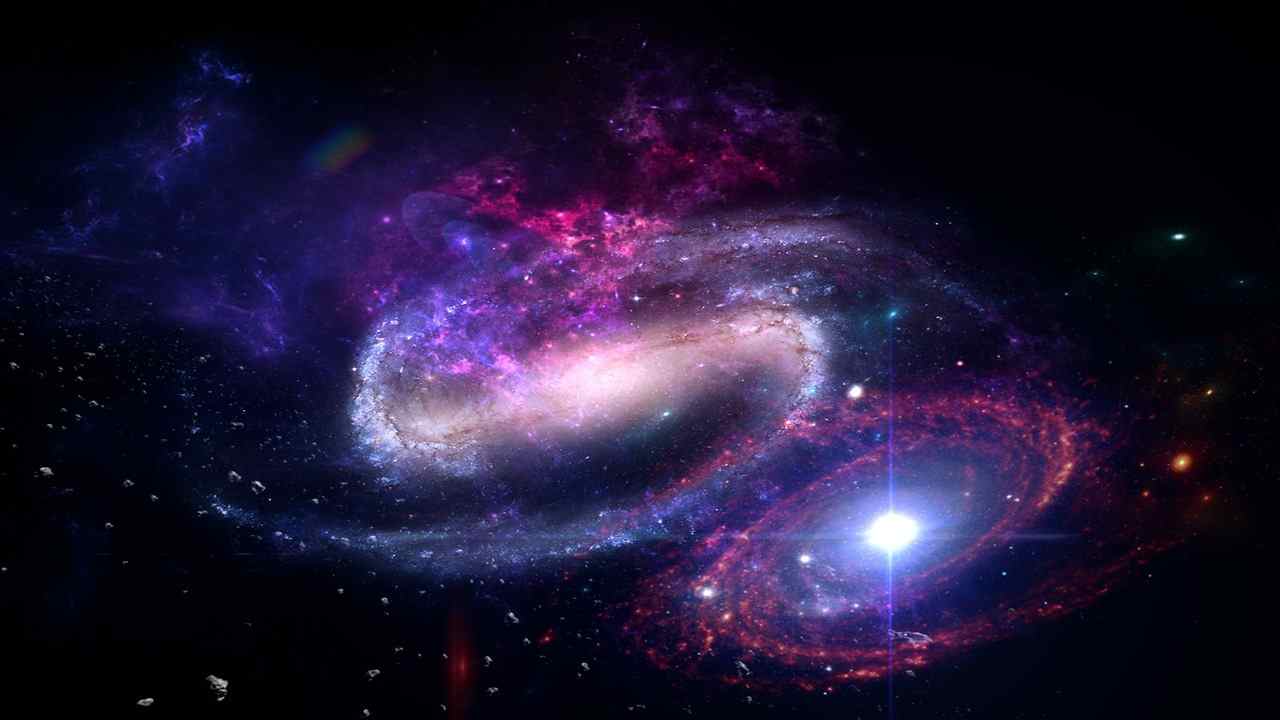
Billions of galaxies fill the modern universe, from elegant spirals to giant ellipticals stretching across hundreds of thousands of light‑years. But the very first galaxies were nothing like these enormous systems. They were tiny, turbulent, fast‑changing structures that emerged from a universe still settling after the Big Bang.
Reionization: How the First Stars Transformed the Universe
Long before galaxies took their modern shapes and long before the Milky Way existed, the universe went through one of its most dramatic transformations. It began in darkness, filled with neutral hydrogen stretching across billions of light‑years. Then the first stars appeared—brilliant, massive, short‑lived giants.
What Triggered the First Stars to Ignite in the Early Universe?
Before the first stars formed, the universe was a dark, silent expanse. There were no galaxies, no planets, and no light—only vast clouds of hydrogen and helium drifting through space. This period, known as the Cosmic Dark Ages, lasted for nearly 100 million years after the Big Bang.
Explore More Topics
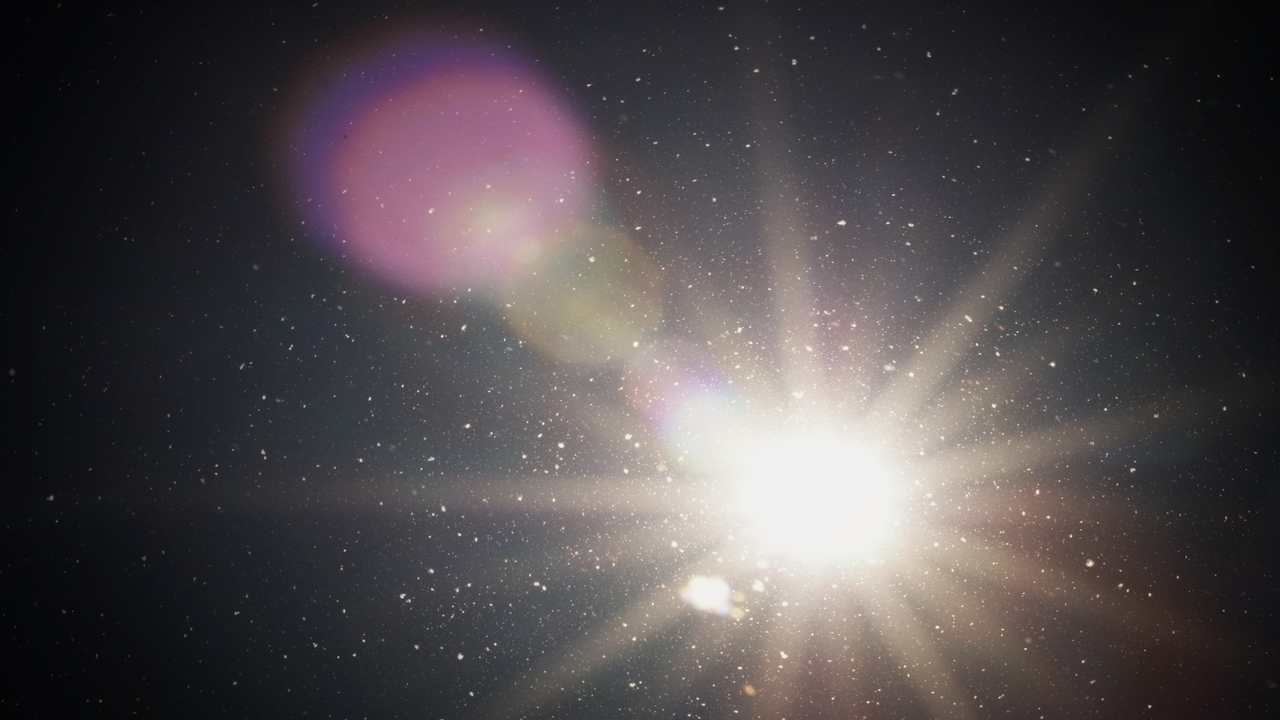
Gamma-Ray Bursts: The Universe’s Most Violent Explosions
Gamma-ray bursts (GRBs) are brief, powerful flashes of high-energy radiation that outshine entire galaxies for a few seconds. They occur randomly across the sky, often billions of light-years away, yet the energy they release is so intense that Earth-based detectors can pick them up instantly. These events push astrophysics to its limits and provide a rare glimpse into the universe’s most extreme processes.
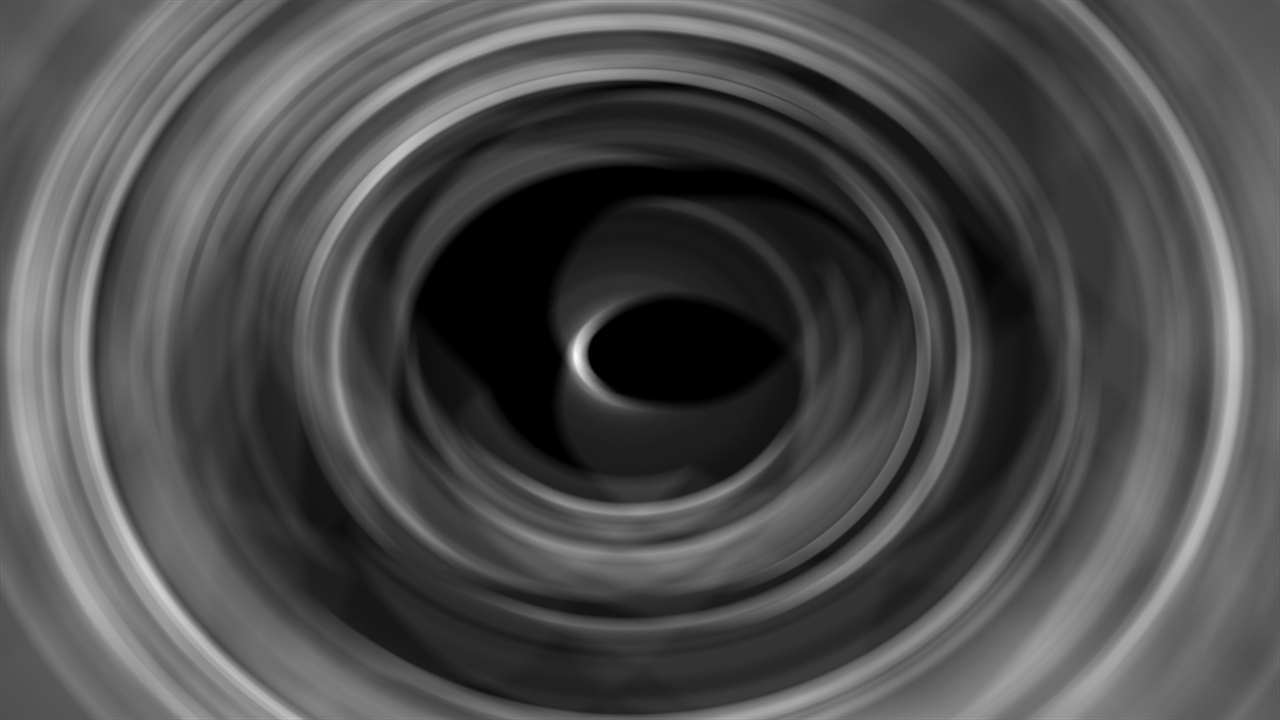
What Happens Inside a Black Hole? Exploring the Unknown Interior
Black holes are among the most mysterious objects in the universe. While scientists understand how black holes form and how they interact with their surroundings, what happens inside a black hole remains one of the greatest unsolved mysteries in physics. Crossing the event horizon—the point of no return—takes you into a realm where spacetime is warped beyond recognition and where our current theories break down.
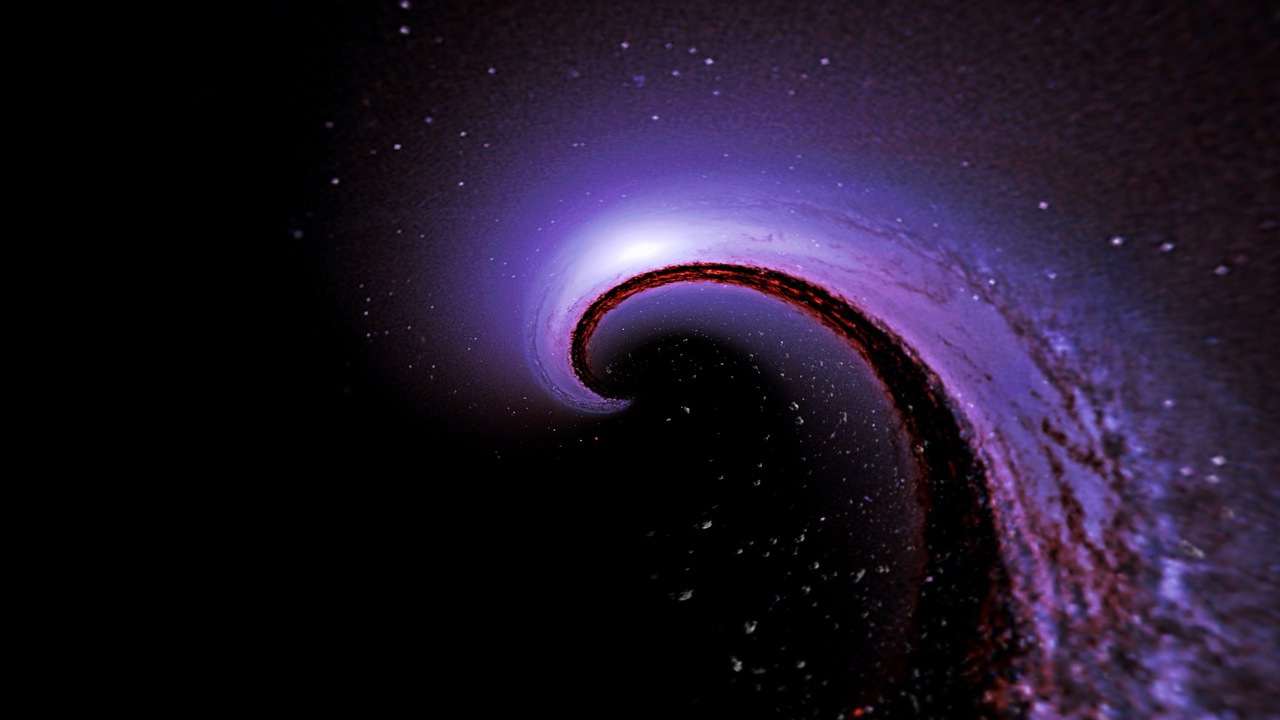
The Darkest Objects in the Universe: How We Detect Invisible Black Holes
Black holes are famous for being invisible. They emit no light, no radiation, and no signals that can be directly detected with traditional telescopes. Yet scientists have discovered dozens of them and mapped their behavior across the cosmos. How is this possible?