The Darkest Objects in the Universe: How We Detect Invisible Black Holes
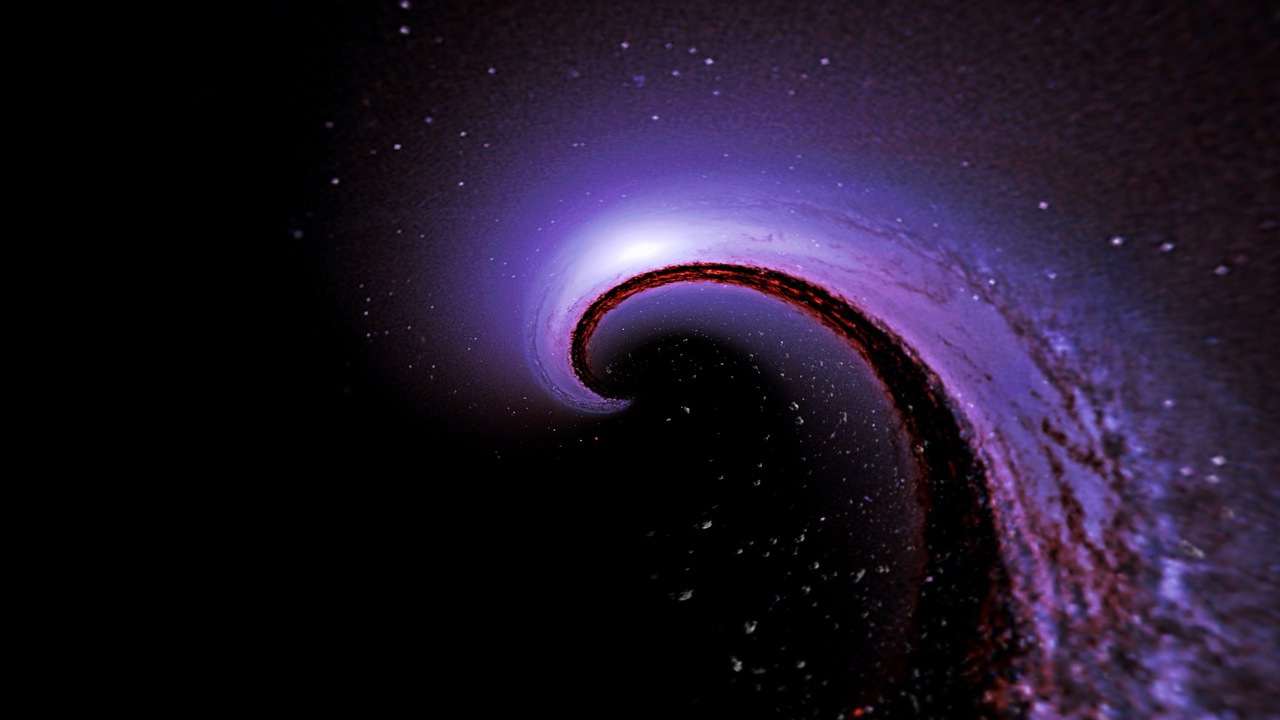
Black holes are famous for being invisible. They emit no light, no radiation, and no signals that can be directly detected with traditional telescopes. Yet scientists have discovered dozens of them and mapped their behavior across the cosmos. How is this possible?In this article, we’ll explore the clever techniques astronomers use to detect objects that cannot be seen, touching on gravity, motion, light distortion, high-energy radiation, and even ripples in spacetime itself.
Why Black Holes Are Invisible
A black hole is an object so dense that its escape velocity exceeds the speed of light. Because nothing can move faster than light—not particles, not signals, not even photons—any light that enters the event horizon becomes trapped forever.This creates a perfect cosmic dark spot.But black holes still reveal themselves through their effects on nearby matter and energy.The universe is full of clues—if we know where to look.
Method 1: Watching Stars Orbit “Nothing”
One of the most powerful ways to detect a black hole is by observing how nearby stars move.In the Milky Way’s center, stars orbit around an apparently empty region. Their high-speed, tight orbits reveal the presence of a massive object.
Sagittarius A*: The Best Example
Using decades of data, astronomers found:
- Stars orbiting something invisible
- Speeds exceeding 7,000 km/s
- A central mass of 4 million Suns
- No detectable lightThe only possible explanation is a supermassive black hole.This method—studying stellar motions—has become standard in identifying unseen giants across the universe.
Method 2: Accretion Disks and X‑Ray Emissions
Although black holes themselves emit nothing, the material falling into them does.When gas spirals inward, it forms an accretion disk:
- Friction heats the gas
- Temperatures reach millions of degrees
- The disk glows in X‑rays and ultravioletX-ray telescopes such as Chandra, XMM‑Newton, and NuSTAR detect these energetic signals.
Why This Works
A star alone cannot produce such intense, concentrated X-ray emissions.But a compact object—like a black hole—can.If astronomers see a sudden burst of high-energy light from an apparently empty region, it's a strong sign of a black hole feeding.
Method 3: Tidal Disruption Events (Stars Being Torn Apart)
Sometimes a star gets too close to a black hole and is violently shredded—a process known as a tidal disruption event (TDE).Signs of a TDE include:
- Rapid brightening in ultraviolet and X-ray wavelengths
- A distinctive flare pattern that fades over months or years
- Debris forming a temporary accretion diskThese flares act like cosmic fireworks, announcing the presence of a previously hidden black hole.Recent TDE events such as ASASSN‑14li and AT2019qiz gave astronomers some of the clearest evidence yet of black holes consuming stars.
Method 4: Gravitational Waves
In 2015, the LIGO observatory made history by detecting gravitational waves—tiny ripples in spacetime caused by the collision of two black holes.These waves carry:
- Information about the masses
- The speeds
- The final merger dynamicsFor the first time, black holes were not “seen” through light, but through shaking the fabric of spacetime.
Why This Is Revolutionary
Gravitational waves allow astronomers to detect:
- Collisions of stellar-mass black holes
- Mergers billions of light‑years away
- Objects previously impossible to observeThis method has opened an entirely new era of black hole discovery.
Method 5: Gravitational Lensing
Gravity bends light—a prediction Einstein made in 1915.Black holes warp spacetime so strongly that they act like cosmic lenses.When a black hole passes between Earth and a distant star:
- The background star brightens
- Its image may distort into rings or arcs
- Light appears magnifiedThis is called gravitational microlensing.Although the black hole remains invisible, its gravitational fingerprint is unmistakable.In 2022, astronomers confirmed one of the first isolated black holes using this technique.
Method 6: Radio Shadows (Event Horizon Telescope)
In 2019, the Event Horizon Telescope (EHT) produced the first-ever image of a black hole—the one in galaxy M87.The image isn’t a photo of the black hole itself, but rather the shadow it casts against bright surrounding gas.Features include:
- A dark central shadow
- A glowing donut-shaped ring
- Light twisted by intense gravityThis method relies on:
- Global radio telescope networks
- Interferometry
- Massive computational reconstructionIt's one of the most advanced ways to study black hole boundaries.
Method 7: Observing Jet Activity
Many black holes launch enormous relativistic jets—streams of plasma moving near the speed of light.These jets:
- Stretch thousands of light‑years
- Emit radio, optical, and X-ray radiation
- Are powered by spinning black holesJets signal that a black hole is actively accreting matter.
Why Jets Are Black Hole Signatures
Neutron stars don’t generate jets of the same power or structure.Supermassive black holes, however, commonly do.Observing a jet is often a direct sign that a black hole is nearby.
Method 8: Measuring Infrared Variability
In dusty regions where visible light is blocked, astronomers use infrared telescopes.Infrared flashes near a galaxy’s center often indicate:
- Hot spots in the accretion disk
- Gas clouds being heated by black hole activity
- Turbulence caused by extreme gravityThis method helped map Sagittarius A* in unprecedented detail.
Method 9: Detecting High-Energy Particles
Black holes accelerate particles to incredible speeds.These particles produce:
- Gamma rays
- High-energy neutrinos
- Radio burstsFacilities such as:
- Fermi Gamma-Ray Space Telescope
- IceCube Neutrino Observatorydetect these unusual signals and trace them back to black hole environments.
The Challenge: Distinguishing Black Holes from Neutron Stars
Not every dark, compact object is a black hole.Neutron stars can mimic some of the same signals.Astronomers look for:
- Mass (above 3 solar masses strongly favors black hole)
- Lack of a hard surface
- Absence of pulsar-like emissionsRefining this distinction remains a major area of research.
The Future of Black Hole Detection
Astronomy is entering a new era where black holes will be mapped with even greater precision.
Upcoming tools include:
- LISA (space-based gravitational wave observatory)
- Extremely Large Telescope (ELT)
- Square Kilometre Array (SKA)
- Next-generation X-ray observatoriesThese technologies will reveal black holes we’ve never seen and answer questions about their formation, growth, and influence.
Conclusion
Black holes may be invisible, but the universe provides countless clues about their presence.By watching how stars move, detecting high-energy radiation, measuring gravitational waves, and observing distortions in light, astronomers have developed a comprehensive toolkit for finding the darkest objects in existence.The study of black holes is not just about detecting invisible giants—it’s about understanding how the universe works on its most extreme scales.
References
- NASA Chandra X-ray Observatory – Black Hole Education
- LIGO Scientific Collaboration – Gravitational Wave Discoveries
- Event Horizon Telescope Collaboration (2019–2022) Publications
- Fermi Gamma-Ray Space Telescope Data Releases
- Genzel, R., Ghez, A. (Nobel Prize 2020) – Galactic Center Black Hole Research
- ESA XMM-Newton Mission Documentation
More from Black Holes & Extreme Phenomena
Gamma-Ray Bursts: The Universe’s Most Violent Explosions
Gamma-ray bursts (GRBs) are brief, powerful flashes of high-energy radiation that outshine entire galaxies for a few seconds. They occur randomly across the sky, often billions of light-years away, yet the energy they release is so intense that Earth-based detectors can pick them up instantly. These events push astrophysics to its limits and provide a rare glimpse into the universe’s most extreme processes.
What Happens Inside a Black Hole? Exploring the Unknown Interior
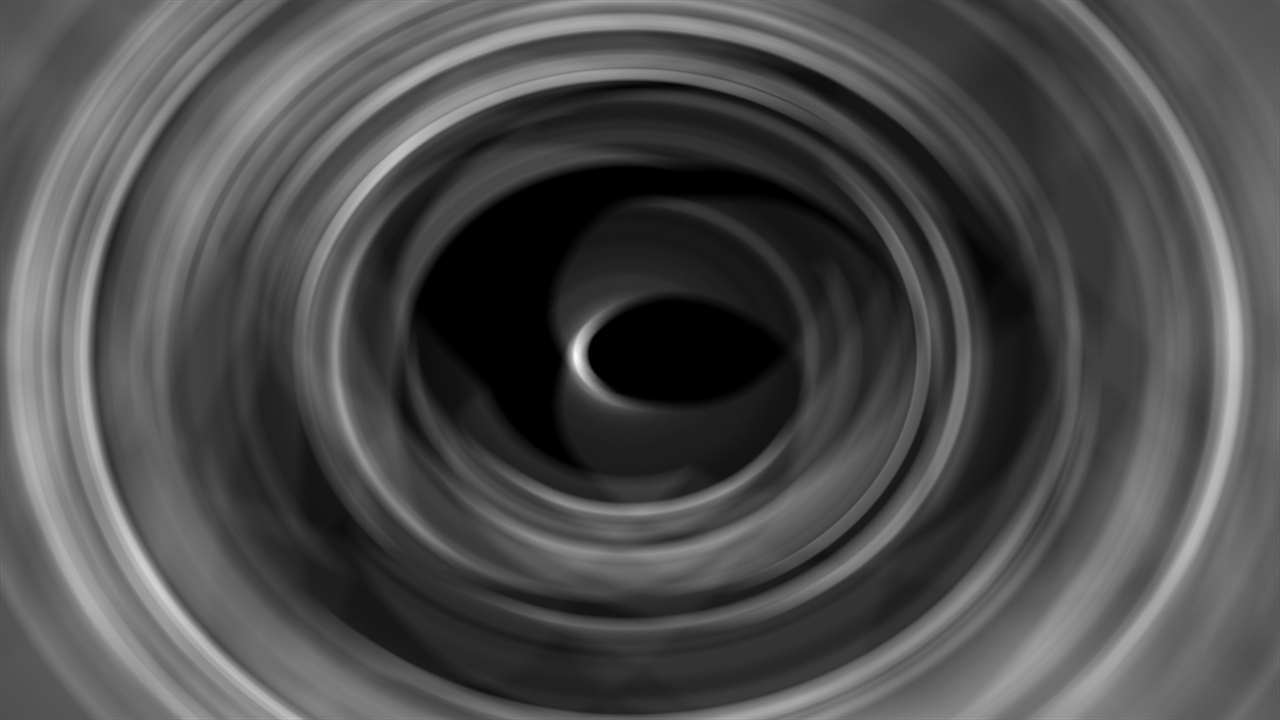
Black holes are among the most mysterious objects in the universe. While scientists understand how black holes form and how they interact with their surroundings, what happens inside a black hole remains one of the greatest unsolved mysteries in physics. Crossing the event horizon—the point of no return—takes you into a realm where spacetime is warped beyond recognition and where our current theories break down.

Spaghettification: The Strange Physics of Being Stretched in Space
Black holes are famous for their extreme gravitational pull, but one of the strangest and least intuitive effects they create is spaghettification—a real physical process where objects are stretched into long, thin strands as they fall toward a black hole.
Explore More Topics
Are Smart Telescopes Worth It? A Beginner Buying Guide for 2026
This is why convenience can change the economics of ownership.

The Moon’s Origin: How Earth Got Its Only Natural Satellite
Earth’s Moon is so familiar and constant that it’s easy to forget just how strange its existence is. Compared with other moons in the solar system, it is enormous relative to its parent planet, unusually dense, and positioned in a way that profoundly affects Earth’s tides, climate stability, and even the evolution of life.
Why Mercury Has Extreme Temperatures: A Planet of Extremes
Mercury looks like a simple world at first glance—small, rocky, and covered in craters. But beneath that quiet appearance lies one of the most extreme environments in the solar system. Its temperature swings from scorching heat to freezing cold, making Mercury a planet of brutal contrasts unlike anywhere else.