How the Solar System Was Formed: From Dust to Planets
How the Solar System Was Formed: From Dust to Planets
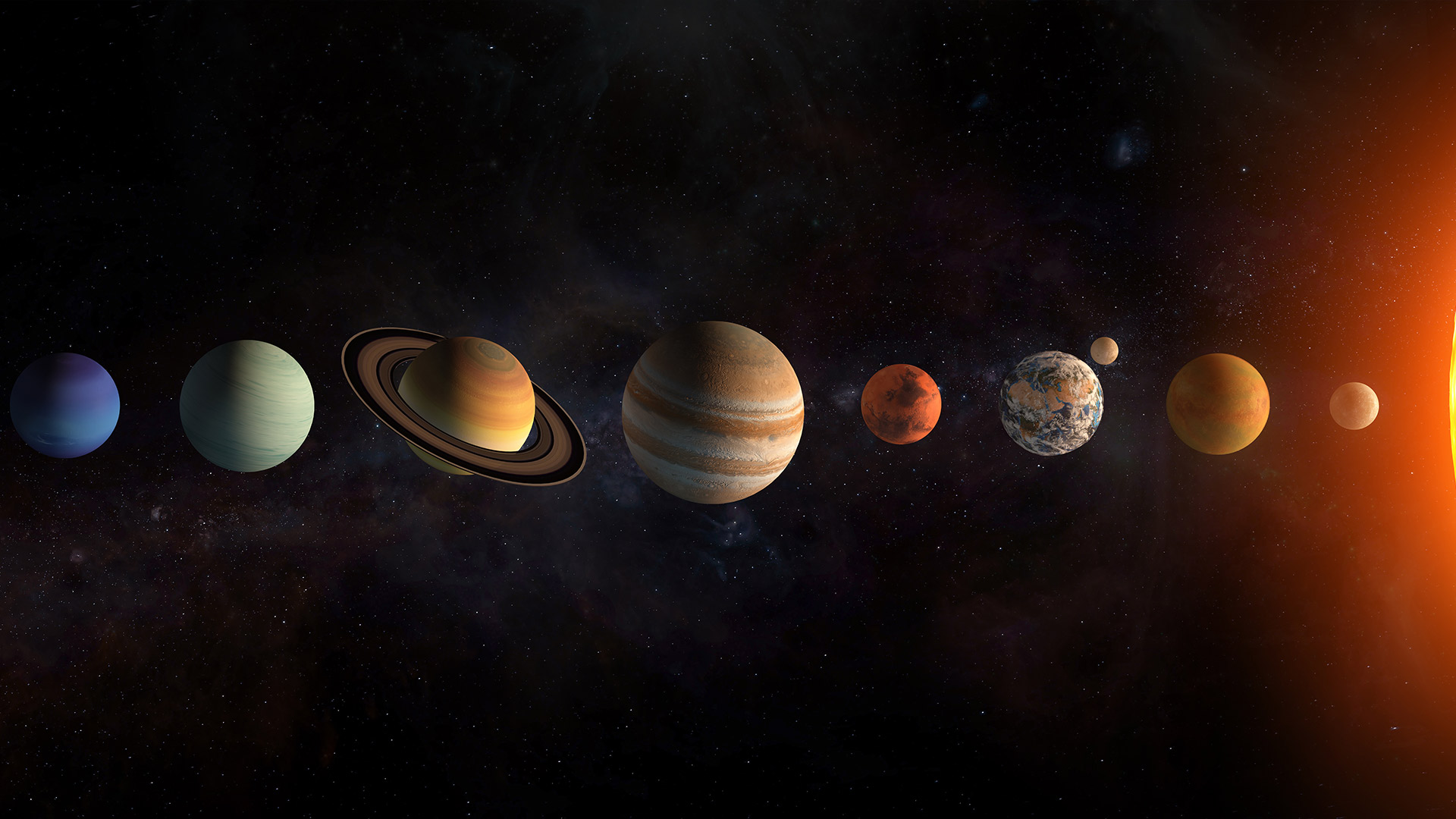
The solar system as we know it—containing the Sun, eight planets, moons, asteroids, and comets—was born over 4.5 billion years ago from a cloud of gas and dust. This process, called solar system formation, is supported by astronomical observations, computer simulations, and analysis of meteorites.
Step 1: A Giant Molecular Cloud
Everything began in a region known as a giant molecular cloud—a cold, dense area of gas and dust floating in our Milky Way galaxy. These clouds are mostly composed of hydrogen, with trace amounts of helium and heavier elements. At some point, a disturbance—possibly a nearby supernova explosion—triggered the collapse of a portion of this cloud under its own gravity.
Step 2: The Birth of the Protosun
As the cloud collapsed, it began to spin and flatten into a rotating disk, a structure known as a protoplanetary disk. At the center of this disk, material concentrated to form a hot, dense core—the protosun. Over time, nuclear fusion ignited in its core, and the Sun was born.
- Timeframe: This collapse and formation of the protosun took roughly 100,000 to 500,000 years.
- Temperature: The core temperature had to reach around 10 million Kelvin for nuclear fusion to begin.
Step 3: Dust to Planetesimals
While the Sun formed at the center, the remaining material in the disk began a different process. Microscopic dust particles within the disk began to stick together through electrostatic forces, forming larger and larger clumps. These clumps eventually became planetesimals—solid objects at least a kilometer in size.
- Key process: Accretion—small particles clump together over time due to gravity and collisions.
Some planetesimals collided and merged, while others were broken apart. Over millions of years, gravitational attraction allowed some planetesimals to grow into protoplanets—the building blocks of planets.
Step 4: Planet Formation
The process of planet formation depended heavily on the location within the disk.
Inner Solar System: Closer to the Sun, temperatures were too high for gases and ices to survive. This led to the formation of the terrestrial planets—Mercury, Venus, Earth, and Mars—made mostly of rock and metal.
Outer Solar System: Farther from the Sun, cooler temperatures allowed gases and ices to condense. This allowed the formation of gas giants like Jupiter and Saturn, and ice giants like Uranus and Neptune.
Jupiter, being the largest, likely formed first and influenced the orbits of many neighboring objects, shaping the early architecture of the solar system.
Step 5: Clearing the Neighborhood
As planets grew, their gravitational pull increased. This allowed them to clear their orbital zones of leftover debris—a key requirement for planetary status defined by the International Astronomical Union (IAU).
Some leftover materials that weren’t incorporated into planets remained as:
- Asteroids: Mostly located in the Asteroid Belt between Mars and Jupiter.
- Comets: Found in the Kuiper Belt and the distant Oort Cloud.
- Moons: Some planetesimals were captured by planetary gravity and became natural satellites.
Step 6: Stabilization and the Late Heavy Bombardment
The solar system eventually began to stabilize, but not before a turbulent period known as the Late Heavy Bombardment (~4 to 3.8 billion years ago), when a spike in asteroid and comet impacts left craters on the Moon, Earth, and other bodies.
This era likely helped deliver water and organic molecules to Earth, laying the foundation for life.
Evidence of Formation
Scientists support this formation theory through multiple lines of evidence:
- Meteorites: Some meteorites contain Calcium-Aluminum-rich Inclusions (CAIs), which are the oldest known solid materials in the solar system.
- Protoplanetary Disks: Observations of young stars (e.g., in the Orion Nebula) reveal disks similar to the one that formed our solar system.
- Planetary Orbits: The near-circular, coplanar orbits of most planets support the disk-collapse model.
Conclusion
The solar system’s formation was a complex, multi-stage process that took millions of years. From a collapsing gas cloud to a structured system of planets and moons, this process reflects the dynamic and ever-evolving nature of the universe. While much has been learned, scientists continue to study distant planetary systems to better understand how common—or rare—our solar system might be.
More from Solar System Basics
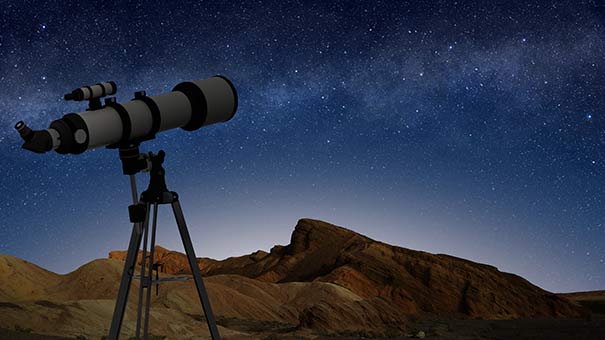
Are Smart Telescopes Worth It? A Beginner Buying Guide for 2026
This is why convenience can change the economics of ownership.

The Moon’s Origin: How Earth Got Its Only Natural Satellite
Earth’s Moon is so familiar and constant that it’s easy to forget just how strange its existence is. Compared with other moons in the solar system, it is enormous relative to its parent planet, unusually dense, and positioned in a way that profoundly affects Earth’s tides, climate stability, and even the evolution of life.
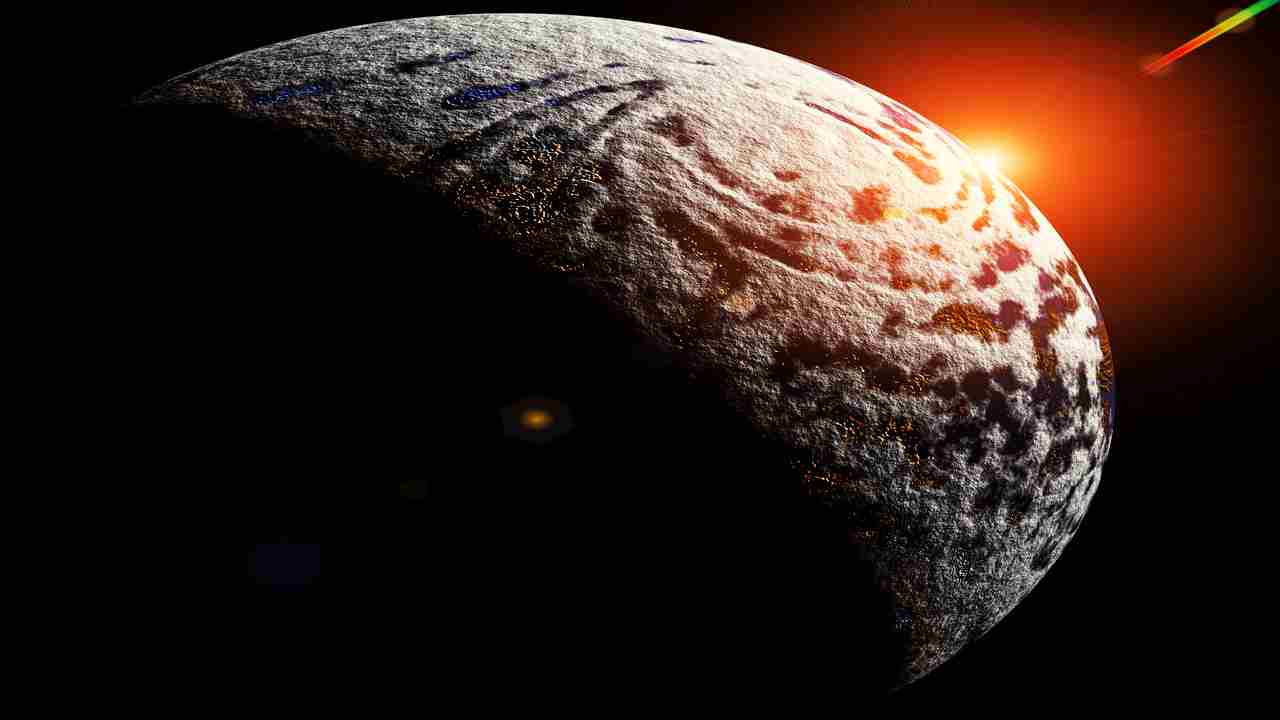
Why Mercury Has Extreme Temperatures: A Planet of Extremes
Mercury looks like a simple world at first glance—small, rocky, and covered in craters. But beneath that quiet appearance lies one of the most extreme environments in the solar system. Its temperature swings from scorching heat to freezing cold, making Mercury a planet of brutal contrasts unlike anywhere else.
Explore More Topics
Gamma-Ray Bursts: The Universe’s Most Violent Explosions
Gamma-ray bursts (GRBs) are brief, powerful flashes of high-energy radiation that outshine entire galaxies for a few seconds. They occur randomly across the sky, often billions of light-years away, yet the energy they release is so intense that Earth-based detectors can pick them up instantly. These events push astrophysics to its limits and provide a rare glimpse into the universe’s most extreme processes.

What Happens Inside a Black Hole? Exploring the Unknown Interior
Black holes are among the most mysterious objects in the universe. While scientists understand how black holes form and how they interact with their surroundings, what happens inside a black hole remains one of the greatest unsolved mysteries in physics. Crossing the event horizon—the point of no return—takes you into a realm where spacetime is warped beyond recognition and where our current theories break down.
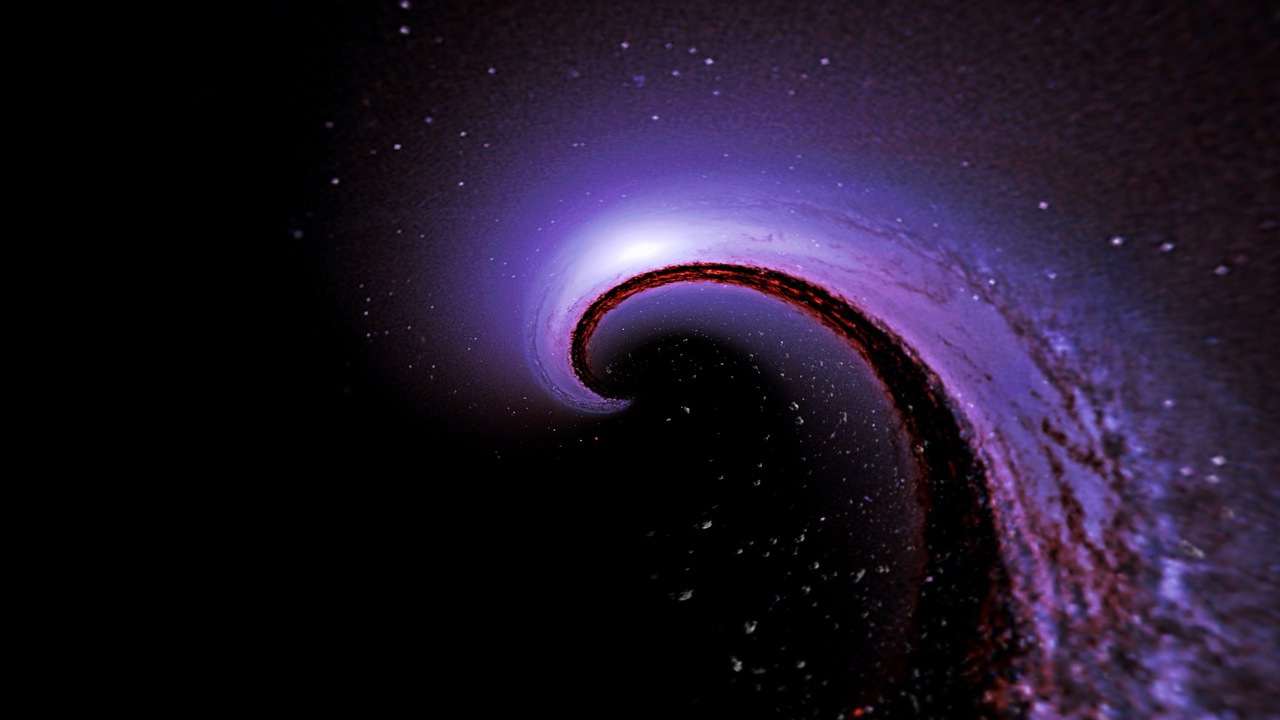
The Darkest Objects in the Universe: How We Detect Invisible Black Holes
Black holes are famous for being invisible. They emit no light, no radiation, and no signals that can be directly detected with traditional telescopes. Yet scientists have discovered dozens of them and mapped their behavior across the cosmos. How is this possible?