Why Mercury Has Extreme Temperatures: A Planet of Extremes
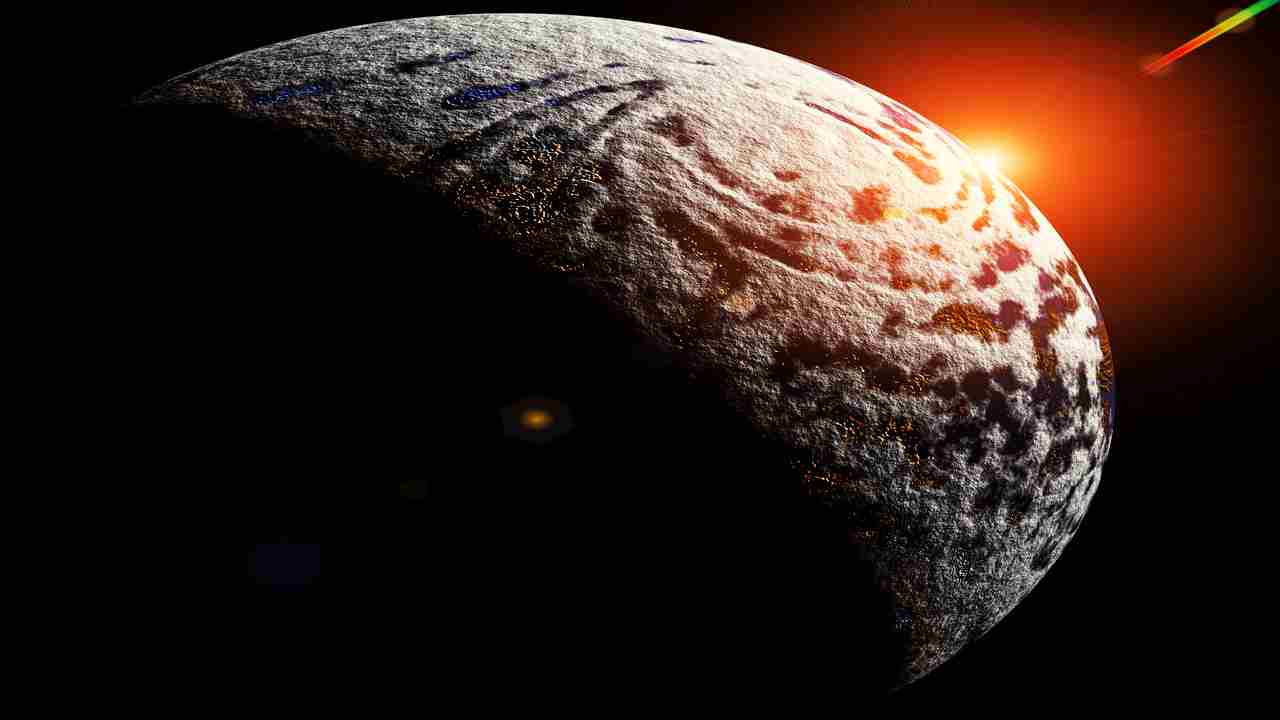
Mercury looks like a simple world at first glance—small, rocky, and covered in craters. But beneath that quiet appearance lies one of the most extreme environments in the solar system. Its temperature swings from scorching heat to freezing cold, making Mercury a planet of brutal contrasts unlike anywhere else.
These intense variations come from a combination of Mercury’s surface conditions, rotation, orbit, and lack of atmosphere. Understanding why Mercury behaves this way reveals how different a planet can be when even a few factors change.
The Sun’s Intense Influence
Mercury orbits closer to the Sun than any other planet.At its closest point (perihelion), it lies only 46 million km from the Sun—less than half the distance between the Sun and Earth.This proximity exposes Mercury to:
- Stronger solar radiation
- Higher solar wind intensity
- Extreme heating on the sunlit sideTemperatures on the day side can reach 430°C (800°F)—hot enough to melt lead.But this alone isn’t enough to explain the wild temperature swings. Venus is closer in temperature overall, yet far more stable. Something else is going on with Mercury.
Almost No Atmosphere to Hold Heat
Mercury has an exosphere instead of a true atmosphere—a thin layer of particles created by:
- Solar wind
- Micrometeor impacts
- Surface evaporationBut this exosphere is so thin that it can’t trap heat.
What this means:
- Heat escapes instantly when the Sun sets
- No thermal blanket exists to moderate temperatures
- The night side drops to –180°C (–290°F)These extreme differences make Mercury the planet with the largest temperature range in the entire solar system.
A Strange Slow Rotation
Mercury rotates very slowly compared to Earth.One full rotation takes about 59 Earth days.This creates long, intense heating periods on the day side and long, deep cooling periods on the night side.
Daytime:
The surface bakes for weeks without relief.
Nighttime:
The same area sits in darkness for another long stretch, losing every bit of heat absorbed earlier.Even parts of Mercury’s surface that appear sunlit at certain times can spend half their local year in darkness.
Mercury’s Unusual 3:2 Spin–Orbit Resonance
Mercury has one of the strangest rotational states in the solar system.It rotates three times for every two orbits around the Sun.This 3:2 resonance leads to an unusual pattern:
- Mercury’s solar day (sunrise to sunrise) is 176 Earth days
- The same hemisphere faces the Sun at each perihelion
- Some regions receive more heating than others over long periodsAs a result, certain longitudes experience hotter temperatures over Mercury’s year than others—unique among planets.
No Tilt Means No Seasons
Earth and Mars have axial tilts, which create seasons.Mercury, however, has a tilt of just 0.03°.This means:
- No seasonal changes
- No variation in sunlight angle
- No warm or cool times of the yearThe Sun behaves almost the same way throughout Mercury’s orbit, making local geography the main factor in temperature differences.
Craters That Never See Sunlight
Despite being the closest planet to the Sun, some parts of Mercury are permanently frozen.Craters near the poles have walls so high that sunlight never reaches the bottom. These regions are trapped in eternal darkness.Scientists believe they contain:
- Frozen water ice
- Organic molecules
- Possibly materials delivered by cometsTemperatures here can remain as low as –200°C (–330°F) even as the equator experiences extreme heat.
Surface Composition Amplifies Temperature Swings
Mercury’s surface is covered in dark, basaltic rock.This type of material:
- Absorbs sunlight efficiently
- Heats up quickly
- Cool down rapidly when sunlight disappearsThe lack of dust or soil to insulate the surface increases the speed of both heating and cooling.Every sunrise triggers a rapid increase in temperature, and every sunset brings an equally rapid plunge.
A Magnetic Field Without Atmospheric Protection
Mercury has a weak magnetic field, but without an atmosphere to help shield the surface, solar radiation directly bombards the planet.This contributes to:
- Surface particle release
- Heating of exposed regions
- Increased erosion from solar windStill, none of these effects prevent the rapid loss of heat on the night side.
Why Mercury Isn’t the Hottest Planet
Given its distance from the Sun, Mercury should be the hottest planet. Yet Venus holds that title.The reason is simple:Venus has a thick atmosphere that traps heat through an extreme greenhouse effect.Mercury has almost no atmosphere at all—so it bakes and freezes in cycles.If Mercury had even a thin atmosphere, its temperature would be far more stable.
What Mercury Teaches Us About Planetary Environments
Mercury shows how a planet’s temperature is shaped by multiple factors:
- Distance from the Sun
- Rotation speed
- Presence or absence of an atmosphere
- Surface composition
- Orbital resonanceSmall changes in any of these can lead to completely different surface conditions.Studying Mercury helps scientists understand:
- How rocky planets evolve
- How atmospheres form or disappear
- Why Earth’s temperature is unusually stable
- What conditions are needed for habitabilityIt is a reminder that even within one solar system, worlds can diverge dramatically simply because of where they formed and how they rotate.
More from Solar System Basics
Are Smart Telescopes Worth It? A Beginner Buying Guide for 2026
This is why convenience can change the economics of ownership.

The Moon’s Origin: How Earth Got Its Only Natural Satellite
Earth’s Moon is so familiar and constant that it’s easy to forget just how strange its existence is. Compared with other moons in the solar system, it is enormous relative to its parent planet, unusually dense, and positioned in a way that profoundly affects Earth’s tides, climate stability, and even the evolution of life.
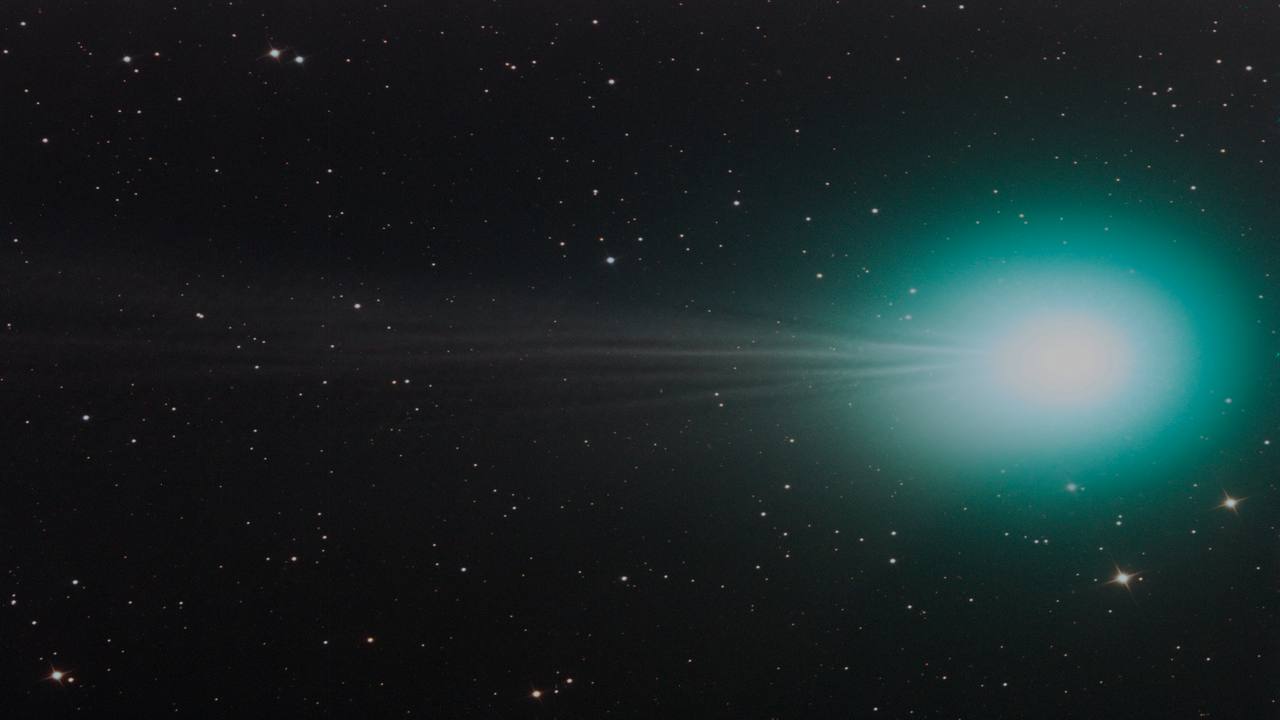
Comets vs. Asteroids: What’s the Real Difference?
At first glance, comets and asteroids may seem like similar space rocks drifting through the solar system. Both orbit the Sun, both are relics from the solar system’s formation, and both occasionally pass close to Earth. But despite these similarities, the two types of objects are born in very different environments and behave in dramatically different ways. Understanding these differences helps scientists trace our solar system’s history and study the conditions that shaped Earth.
Explore More Topics
Gamma-Ray Bursts: The Universe’s Most Violent Explosions
Gamma-ray bursts (GRBs) are brief, powerful flashes of high-energy radiation that outshine entire galaxies for a few seconds. They occur randomly across the sky, often billions of light-years away, yet the energy they release is so intense that Earth-based detectors can pick them up instantly. These events push astrophysics to its limits and provide a rare glimpse into the universe’s most extreme processes.

What Happens Inside a Black Hole? Exploring the Unknown Interior
Black holes are among the most mysterious objects in the universe. While scientists understand how black holes form and how they interact with their surroundings, what happens inside a black hole remains one of the greatest unsolved mysteries in physics. Crossing the event horizon—the point of no return—takes you into a realm where spacetime is warped beyond recognition and where our current theories break down.
The Darkest Objects in the Universe: How We Detect Invisible Black Holes
Black holes are famous for being invisible. They emit no light, no radiation, and no signals that can be directly detected with traditional telescopes. Yet scientists have discovered dozens of them and mapped their behavior across the cosmos. How is this possible?