Cosmic Microwave Background: The Echo of the Big Bang
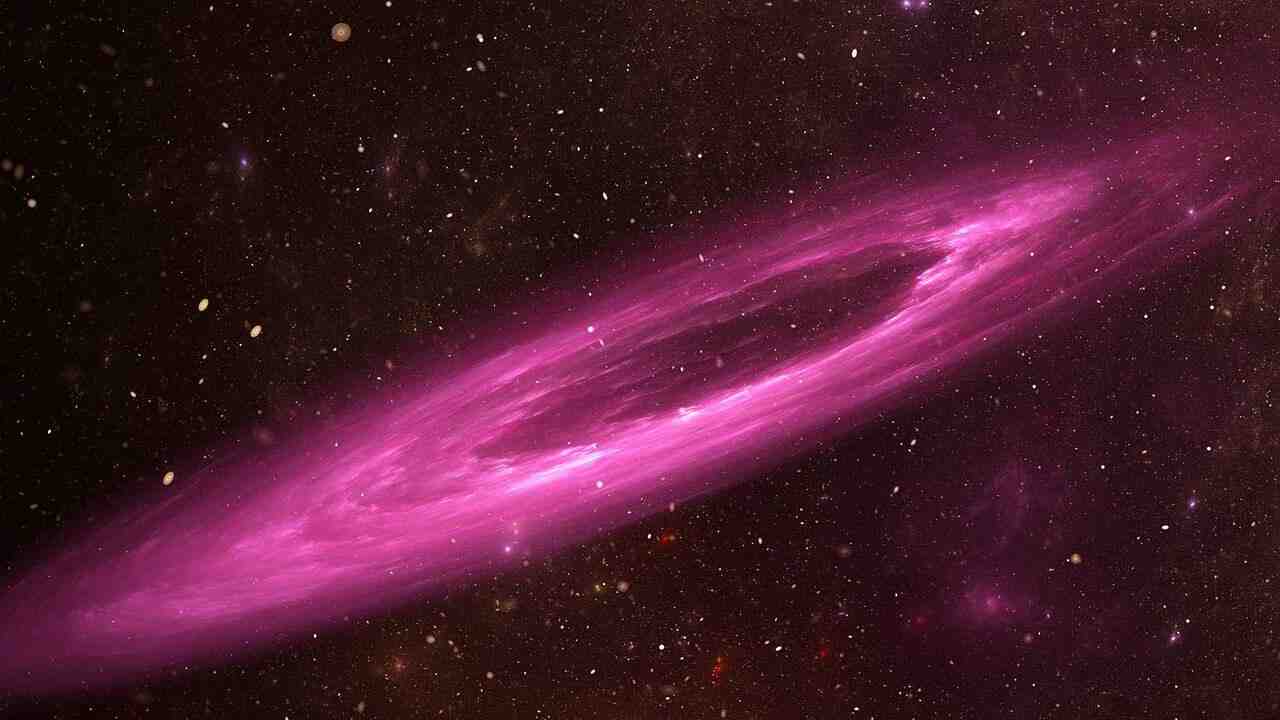
Cosmic Microwave Background: The Echo of the Big Bang
The Cosmic Microwave Background (CMB) is one of the most important discoveries in modern cosmology. It provides a snapshot of the infant universe and offers crucial evidence supporting the Big Bang theory. This faint radiation, present everywhere in space, is often called the "afterglow" or "echo" of the Big Bang.
This article explains what the CMB is, how it was discovered, its significance, and what it reveals about the origins and evolution of the universe.
What Is the Cosmic Microwave Background?
The Cosmic Microwave Background is a form of electromagnetic radiation filling the entire universe. It has a temperature of about 2.7 Kelvin (-270.45°C), just above absolute zero, and peaks in the microwave region of the electromagnetic spectrum.
The CMB is a relic radiation from approximately 380,000 years after the Big Bang, when the universe had cooled enough for electrons and protons to combine and form neutral hydrogen atoms — a process called recombination. Before recombination, the universe was opaque because free electrons scattered photons constantly. Afterward, photons could travel freely through space, creating the CMB we observe today.
The Discovery of the CMB
In 1964, Arno Penzias and Robert Wilson accidentally discovered the CMB while working with a sensitive radio antenna at Bell Labs. They detected a persistent microwave noise coming from every direction in the sky. This noise was uniform and isotropic, meaning it was the same no matter where they pointed the antenna.
Their discovery matched theoretical predictions by physicists including George Gamow, Ralph Alpher, and Robert Herman, who in the 1940s had predicted leftover radiation from the Big Bang.
Penzias and Wilson were awarded the Nobel Prize in Physics in 1978 for their groundbreaking discovery.
What Does the CMB Tell Us?
The CMB is a goldmine of information about the early universe and cosmology:
1. Supports the Big Bang Theory
The uniform, omnipresent nature of the CMB confirms that the universe started from a hot, dense state and has been expanding and cooling since then.
2. Provides a Cosmic Timeline
By analyzing the CMB, scientists can estimate the age of the universe, currently about 13.8 billion years.
3. Reveals Early Universe Conditions
Tiny fluctuations in the temperature and polarization of the CMB correspond to density variations in the early universe. These variations eventually led to the formation of galaxies and large-scale cosmic structures.
4. Constrains Cosmological Models
The detailed measurements of the CMB allow scientists to refine parameters such as the universe’s composition (dark matter, dark energy, normal matter), geometry, and expansion rate.
Measuring the CMB
Several space missions and ground-based experiments have mapped the CMB with increasing precision:
- COBE (Cosmic Background Explorer) launched in 1989, first measured tiny fluctuations in the CMB.
- WMAP (Wilkinson Microwave Anisotropy Probe) launched in 2001, provided a detailed full-sky map of temperature variations.
- Planck satellite launched in 2009, delivered the most precise measurements to date, including polarization data.
These measurements have established the standard cosmological model known as Lambda Cold Dark Matter (ΛCDM).
The Uniformity and Anisotropy of the CMB
Though largely uniform, the CMB contains slight anisotropies — temperature differences of just one part in 100,000. These minute irregularities reflect the seeds of all future cosmic structures.
Scientists study these anisotropies to understand the physics of the early universe, inflationary models, and the distribution of matter.
Polarization of the CMB
The CMB is not only characterized by temperature variations but also by polarization patterns. These patterns provide clues about the early universe’s conditions and possible gravitational waves generated by cosmic inflation — a rapid expansion right after the Big Bang.
Challenges and Ongoing Research
Despite its success, the study of the CMB faces challenges:
- Foreground contamination from our galaxy and other sources requires careful removal.
- Some anomalies, such as the "cold spot" or alignments in the CMB, are not fully understood.
- Researchers are hunting for primordial gravitational waves and other signals that could further illuminate the universe's earliest moments.
Future missions and experiments will continue to probe the CMB with greater sensitivity.
Conclusion
The Cosmic Microwave Background is the oldest light in the universe, a fossil relic carrying the story of our cosmic origins. Its discovery was a cornerstone in confirming the Big Bang theory and remains a fundamental tool in understanding the universe’s composition, age, and evolution.
Studying the CMB continues to push the boundaries of cosmology, revealing insights into the infancy of the cosmos and guiding us toward answers about its ultimate fate.
References:
- Penzias & Wilson’s 1965 Discovery Paper
- NASA’s COBE, WMAP, and Planck Mission Data
- Reviews on Cosmological Parameters from CMB Observations
- Textbooks on Physical Cosmology and Astrophysics
More from Big Bang & the Expanding Universe
The First Galaxies: How Did They Form After the Big Bang?
Billions of galaxies fill the modern universe, from elegant spirals to giant ellipticals stretching across hundreds of thousands of light‑years. But the very first galaxies were nothing like these enormous systems. They were tiny, turbulent, fast‑changing structures that emerged from a universe still settling after the Big Bang.
Reionization: How the First Stars Transformed the Universe
Long before galaxies took their modern shapes and long before the Milky Way existed, the universe went through one of its most dramatic transformations. It began in darkness, filled with neutral hydrogen stretching across billions of light‑years. Then the first stars appeared—brilliant, massive, short‑lived giants.
What Triggered the First Stars to Ignite in the Early Universe?
Before the first stars formed, the universe was a dark, silent expanse. There were no galaxies, no planets, and no light—only vast clouds of hydrogen and helium drifting through space. This period, known as the Cosmic Dark Ages, lasted for nearly 100 million years after the Big Bang.
Explore More Topics
Gamma-Ray Bursts: The Universe’s Most Violent Explosions
Gamma-ray bursts (GRBs) are brief, powerful flashes of high-energy radiation that outshine entire galaxies for a few seconds. They occur randomly across the sky, often billions of light-years away, yet the energy they release is so intense that Earth-based detectors can pick them up instantly. These events push astrophysics to its limits and provide a rare glimpse into the universe’s most extreme processes.
What Happens Inside a Black Hole? Exploring the Unknown Interior
Black holes are among the most mysterious objects in the universe. While scientists understand how black holes form and how they interact with their surroundings, what happens inside a black hole remains one of the greatest unsolved mysteries in physics. Crossing the event horizon—the point of no return—takes you into a realm where spacetime is warped beyond recognition and where our current theories break down.
The Darkest Objects in the Universe: How We Detect Invisible Black Holes
Black holes are famous for being invisible. They emit no light, no radiation, and no signals that can be directly detected with traditional telescopes. Yet scientists have discovered dozens of them and mapped their behavior across the cosmos. How is this possible?