How the Big Bang Theory Changed Our Understanding of Time and Space
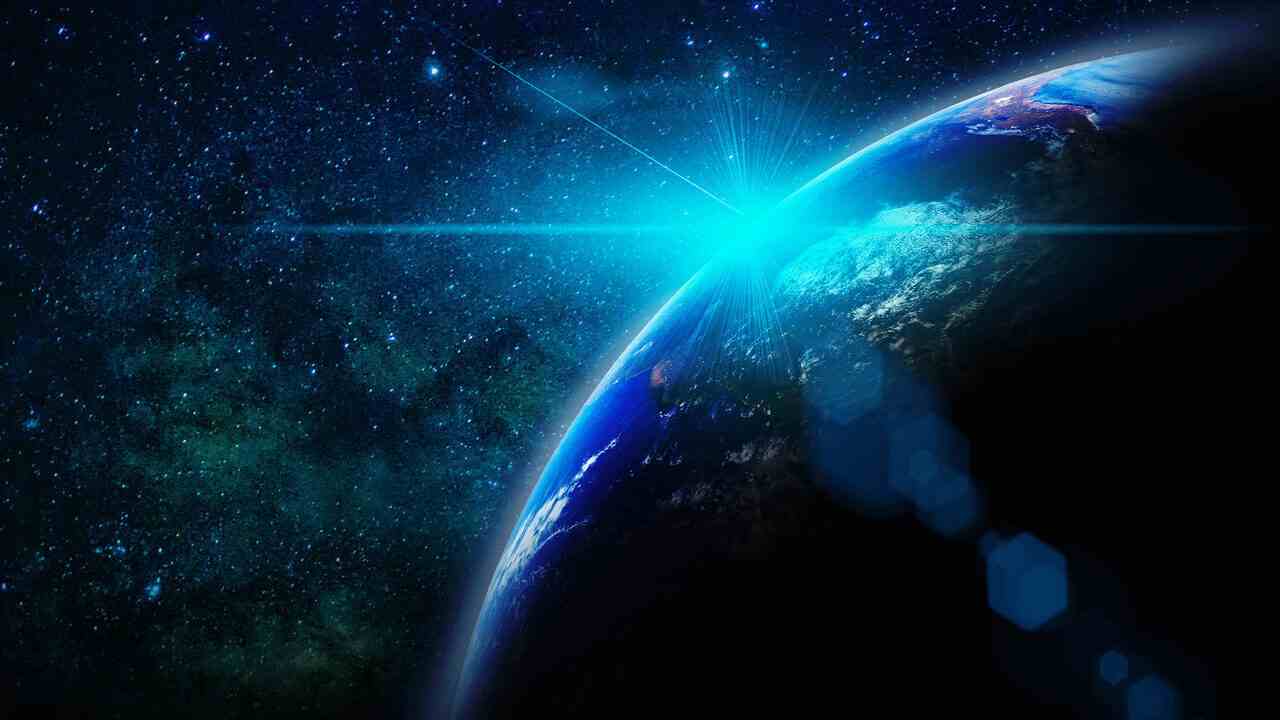
How the Big Bang Theory Changed Our Understanding of Time and Space
The Big Bang theory is one of the most important scientific ideas of the 20th century. It fundamentally altered how we perceive the universe, particularly our concepts of time and space. Before this theory gained acceptance, ideas about the universe were largely static and absolute. The Big Bang introduced a dynamic, evolving cosmos where space and time themselves are interwoven and changing. This article explores how the Big Bang theory reshaped our understanding of time and space, based on scientific evidence and theory, moving from simple ideas to deeper insights.
The Classical View of Time and Space
Before the Big Bang theory, time and space were generally seen as fixed and independent backgrounds. Isaac Newton’s physics, which dominated for centuries, described space as an unchanging stage where events unfold, and time as a universal clock ticking at the same rate everywhere. This view implied that the universe was static, infinite, and eternal.
In this framework, space was absolute—existing independently of matter and events—and time flowed uniformly without connection to physical processes. The universe itself was considered unchanging, with stars and galaxies fixed in place or slowly moving in a static cosmic environment.
The Shift to a Dynamic Universe
Einstein’s theory of General Relativity (1915) challenged the Newtonian view by describing gravity as the curvature of spacetime caused by mass and energy. This meant that space and time were linked as a four-dimensional fabric — spacetime — that could be warped and stretched.
However, early solutions to Einstein’s equations described a universe that either expanded or contracted, contradicting the static universe idea popular at the time. Einstein introduced the “cosmological constant” to force a static solution, but later called it his “biggest blunder” after observations showed the universe was expanding.
The Big Bang Theory Emerges
The discovery of cosmic expansion by Edwin Hubble in the 1920s gave strong support to dynamic universe models. Building on this, the Belgian priest and physicist Georges Lemaître proposed that the universe began from a single point—a “primeval atom” or singularity—from which all space and time emerged. This idea evolved into what we now call the Big Bang theory.
The Big Bang theory states that approximately 13.8 billion years ago, the universe began as an extremely hot, dense point and has been expanding and cooling ever since. Crucially, space itself is expanding, carrying galaxies away from each other, and time started at the Big Bang itself—there was no “before” as time and space originated simultaneously.
How the Big Bang Redefined Time
One of the most profound implications of the Big Bang theory is that time is not absolute or infinite. Time itself had a beginning at the moment of the Big Bang. This contrasts sharply with previous beliefs that time was infinite and independent of the universe’s state.
The theory implies that as we move backward in time, the universe becomes denser and hotter until reaching the initial singularity, where classical physics breaks down and quantum gravity effects become important.
Furthermore, time is intertwined with space into a single continuum—spacetime—meaning events are located within both space and time, and their measurement depends on the observer’s frame of reference. This perspective is central to modern physics and cosmology.
How the Big Bang Changed Our Understanding of Space
The Big Bang theory also altered our perception of space. Instead of being a static, infinite backdrop, space is dynamic and evolving. Space itself is stretching, which causes galaxies to move apart without traveling through space but by space expanding between them.
Moreover, the Big Bang implies that the universe might be finite in size but without edges, similar to the surface of a sphere but in higher dimensions. This challenges the classical idea of infinite, unchanging space.
The discovery of the Cosmic Microwave Background radiation further confirmed that space once existed in a hot, dense state, supporting the Big Bang model.
The Relationship Between Time, Space, and the Universe’s Evolution
Modern cosmology views the universe as a four-dimensional spacetime fabric that evolves. The expansion of space affects the passage of time in subtle ways, predicted by Einstein’s relativity. For example, time passes differently depending on gravitational fields and relative motion.
The Big Bang theory’s dynamic universe model also implies a finite age for the cosmos, allowing scientists to study its history, from the formation of the first atoms and stars to the emergence of galaxies and eventually life.
Conclusion
The Big Bang theory revolutionized our understanding of time and space by showing that they are not absolute, independent entities but are linked, dynamic, and born with the universe itself. It replaced the static, eternal universe concept with one where space expands and time flows from a defined beginning.
This transformation underpins all modern cosmology and physics, influencing how we comprehend the cosmos and our place within it. The ongoing study of time and space continues to reveal more about the universe’s origins, structure, and ultimate fate.
References:
- Hawking, S., & Penrose, R. (1996). The Nature of Space and Time.
- Lemaître, G. (1931). The Primeval Atom: An Essay on the Origin of the Universe.
- Einstein, A. (1915). The Field Equations of Gravitation.
- NASA: The Big Bang and the Expanding Universe.
More from Big Bang & the Expanding Universe
The First Galaxies: How Did They Form After the Big Bang?
Billions of galaxies fill the modern universe, from elegant spirals to giant ellipticals stretching across hundreds of thousands of light‑years. But the very first galaxies were nothing like these enormous systems. They were tiny, turbulent, fast‑changing structures that emerged from a universe still settling after the Big Bang.
Reionization: How the First Stars Transformed the Universe
Long before galaxies took their modern shapes and long before the Milky Way existed, the universe went through one of its most dramatic transformations. It began in darkness, filled with neutral hydrogen stretching across billions of light‑years. Then the first stars appeared—brilliant, massive, short‑lived giants.
What Triggered the First Stars to Ignite in the Early Universe?
Before the first stars formed, the universe was a dark, silent expanse. There were no galaxies, no planets, and no light—only vast clouds of hydrogen and helium drifting through space. This period, known as the Cosmic Dark Ages, lasted for nearly 100 million years after the Big Bang.
Explore More Topics
Gamma-Ray Bursts: The Universe’s Most Violent Explosions
Gamma-ray bursts (GRBs) are brief, powerful flashes of high-energy radiation that outshine entire galaxies for a few seconds. They occur randomly across the sky, often billions of light-years away, yet the energy they release is so intense that Earth-based detectors can pick them up instantly. These events push astrophysics to its limits and provide a rare glimpse into the universe’s most extreme processes.
What Happens Inside a Black Hole? Exploring the Unknown Interior
Black holes are among the most mysterious objects in the universe. While scientists understand how black holes form and how they interact with their surroundings, what happens inside a black hole remains one of the greatest unsolved mysteries in physics. Crossing the event horizon—the point of no return—takes you into a realm where spacetime is warped beyond recognition and where our current theories break down.
The Darkest Objects in the Universe: How We Detect Invisible Black Holes
Black holes are famous for being invisible. They emit no light, no radiation, and no signals that can be directly detected with traditional telescopes. Yet scientists have discovered dozens of them and mapped their behavior across the cosmos. How is this possible?