The Kuiper Belt and Oort Cloud: The Solar System’s Final Frontier
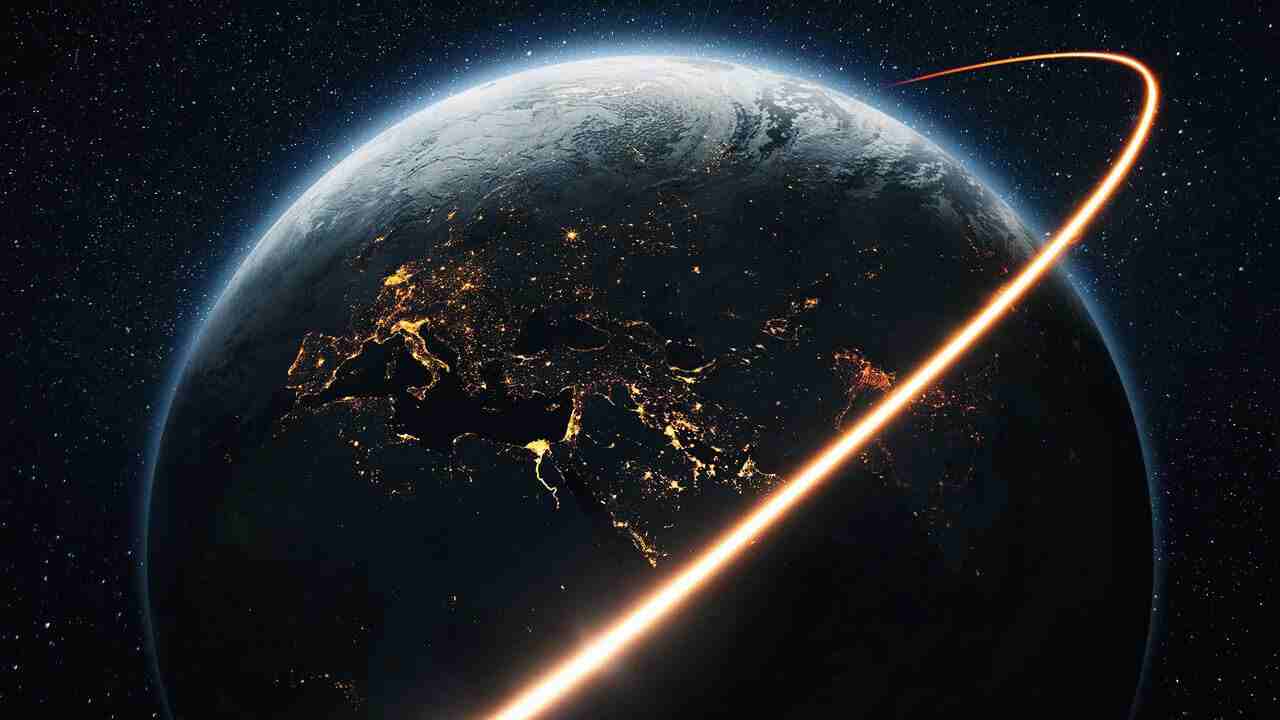
The Kuiper Belt and Oort Cloud: The Solar System’s Final Frontier
Beyond the eight planets and their moons lies a vast and largely unexplored region of our solar system — the Kuiper Belt and the Oort Cloud. These distant zones are home to icy bodies, dwarf planets, and long-period comets. They also offer clues to how the solar system formed and evolved over billions of years.
This article dives deep into these mysterious outer regions — what they are, what they contain, and why scientists consider them the final frontier of our solar system.
What Is the Kuiper Belt?
The Kuiper Belt is a massive ring of icy objects orbiting the Sun beyond Neptune, roughly between 30 and 55 astronomical units (AU) away. For reference, 1 AU is the average distance between the Earth and the Sun.
Named after Dutch-American astronomer Gerard Kuiper, the belt is similar to the asteroid belt but far larger and made mostly of frozen materials like methane, ammonia, and water ice.
Key Characteristics:
- Home to dwarf planets such as Pluto, Haumea, and Makemake
- Contains over 100,000 icy bodies larger than 100 km
- Origin of many short-period comets (which orbit the Sun in less than 200 years)
- Extends in a flat, disk-like structure along the ecliptic plane
Discovery and Exploration
The first Kuiper Belt Object (KBO) was discovered in 1992, sparking a wave of new findings. NASA’s New Horizons mission famously flew by Pluto in 2015, providing the first close-up images and data on a KBO. It later visited another object, Arrokoth, in 2019 — the most distant object ever explored up close.
New Horizons showed that Kuiper Belt objects are surprisingly complex, with geological features, layered surfaces, and organic molecules.
The Oort Cloud: A Spherical Mystery
Even farther out lies the Oort Cloud, a theoretical shell of icy bodies surrounding the entire solar system. Unlike the Kuiper Belt, which is disk-shaped and relatively close, the Oort Cloud forms a spherical region that may extend from 2,000 to 100,000 AU from the Sun.
No object in the Oort Cloud has been directly observed, but its existence is strongly inferred from the behavior of long-period comets, which enter the inner solar system from all directions.
Key Characteristics:
- Thought to contain trillions of icy bodies
- Believed to be the source of long-period comets
- Formed when early solar system debris was flung outward by Jupiter and other giant planets
- Its outer edge may mark the gravitational boundary of the solar system
Comets: Messengers from the Edge
Comets are icy visitors from the solar system’s distant zones. Their orbits and compositions provide clues about the Kuiper Belt and Oort Cloud.
- Short-period comets (like Halley’s Comet) likely originate in the Kuiper Belt
- Long-period comets (like Comet Hale-Bopp) are believed to come from the Oort Cloud
As comets approach the Sun, they develop a glowing coma and tail due to solar radiation, making them visible even from Earth.
Importance to Solar System Science
Studying the Kuiper Belt and Oort Cloud helps scientists:
- Understand the early solar system and how planets migrated
- Investigate the chemical composition of primitive solar material
- Identify potential risks from incoming comets
- Explore where life-supporting molecules might originate
Because these regions are relatively untouched since the solar system’s formation, they act like time capsules, preserving its ancient history.
Challenges of Exploration
Exploring these distant regions poses major challenges:
- Extreme distances: Even light takes hours to travel from the Sun to the Kuiper Belt and years to the Oort Cloud.
- Lack of sunlight: These zones are extremely dark and cold.
- Limited spacecraft range: Only New Horizons has explored a KBO; no mission has ever approached the Oort Cloud.
Future missions like Interstellar Probe or Trident may offer deeper insights, but reaching the Oort Cloud remains a long-term goal for 21st-century space science.
Are There Planets Beyond Neptune?
The Kuiper Belt has also fueled theories about Planet Nine — a hypothetical giant planet whose gravitational effects might explain the strange orbits of some KBOs. While not yet confirmed, ongoing sky surveys continue to search for this elusive object.
If found, Planet Nine could significantly reshape our understanding of the solar system’s outer edge.
Conclusion
The Kuiper Belt and Oort Cloud represent the solar system’s distant frontier — regions teeming with icy bodies, dormant comets, and cosmic secrets. While only partially explored, they hold vital information about how our cosmic neighborhood came to be.
As technology advances and new missions launch, we may finally begin to unlock the mysteries of these outer realms and gain a deeper appreciation of our solar system’s full scope.
More from Solar System Basics
Are Smart Telescopes Worth It? A Beginner Buying Guide for 2026
This is why convenience can change the economics of ownership.

The Moon’s Origin: How Earth Got Its Only Natural Satellite
Earth’s Moon is so familiar and constant that it’s easy to forget just how strange its existence is. Compared with other moons in the solar system, it is enormous relative to its parent planet, unusually dense, and positioned in a way that profoundly affects Earth’s tides, climate stability, and even the evolution of life.
Why Mercury Has Extreme Temperatures: A Planet of Extremes
Mercury looks like a simple world at first glance—small, rocky, and covered in craters. But beneath that quiet appearance lies one of the most extreme environments in the solar system. Its temperature swings from scorching heat to freezing cold, making Mercury a planet of brutal contrasts unlike anywhere else.
Explore More Topics
Gamma-Ray Bursts: The Universe’s Most Violent Explosions
Gamma-ray bursts (GRBs) are brief, powerful flashes of high-energy radiation that outshine entire galaxies for a few seconds. They occur randomly across the sky, often billions of light-years away, yet the energy they release is so intense that Earth-based detectors can pick them up instantly. These events push astrophysics to its limits and provide a rare glimpse into the universe’s most extreme processes.
What Happens Inside a Black Hole? Exploring the Unknown Interior
Black holes are among the most mysterious objects in the universe. While scientists understand how black holes form and how they interact with their surroundings, what happens inside a black hole remains one of the greatest unsolved mysteries in physics. Crossing the event horizon—the point of no return—takes you into a realm where spacetime is warped beyond recognition and where our current theories break down.
The Darkest Objects in the Universe: How We Detect Invisible Black Holes
Black holes are famous for being invisible. They emit no light, no radiation, and no signals that can be directly detected with traditional telescopes. Yet scientists have discovered dozens of them and mapped their behavior across the cosmos. How is this possible?