The Event Horizon: Why Nothing Can Escape a Black Hole
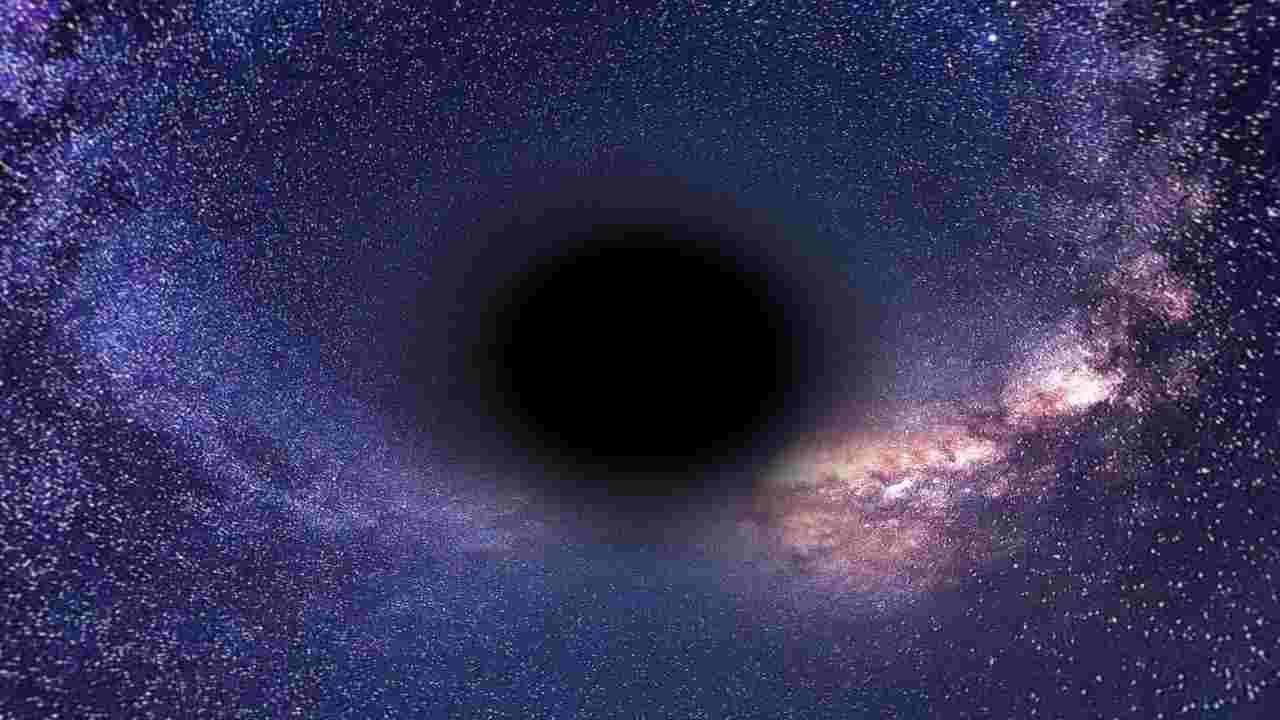
Black holes are some of the most mysterious and extreme objects in the universe. They warp space and time, generate powerful gravitational effects, and challenge our understanding of physics. At the heart of every black hole lies one of the most intriguing boundaries in nature: the event horizon.This article explores what the event horizon is, why nothing can escape it, what happens as you approach it, and how scientists study something that emits no light. Let’s break down this cosmic “point of no return” in simple, accessible terms.
What Is an Event Horizon?
An event horizon is the invisible boundary around a black hole. It marks the place where escape becomes impossible.Outside the horizon, objects can still escape the black hole’s gravity if they move fast enough. Inside it, the escape velocity becomes greater than the speed of light—which nothing in the universe can exceed.This means the event horizon is not a physical surface or wall. You could not “touch” it. Instead, it is a threshold in spacetime where gravity becomes overwhelmingly strong.
Why Nothing Can Escape
To understand why escape is impossible, we need to understand escape velocity.On Earth, a rocket must reach about 11.2 km/s to escape Earth’s gravity. But near a black hole, gravity is much stronger. As you get closer, the required escape speed increases rapidly.
- At the event horizon, escape velocity = speed of light
- Inside the event horizon, escape velocity > speed of lightBecause no object or signal can travel faster than light, nothing—no matter how much energy you apply—can escape once inside.
What Happens as You Approach the Event Horizon?
Falling toward a black hole is unlike any experience imaginable. According to Einstein’s general relativity, strange things happen as you approach the horizon.
1. Time slows down (for outside observers)
To someone watching from a safe distance, you appear to move slower and slower as you approach the event horizon.Just before crossing it, you seem to freeze in place—forever.But from your own perspective, time feels normal. You continue falling without noticing anything unusual at the horizon.
2. Light shifts to red
Light escaping from your body becomes increasingly redshifted (shifted to longer wavelengths).Eventually, the light fades entirely.
3. Spaghettification
In smaller black holes, tidal forces near the event horizon are extremely intense.Your feet (closer to the black hole) would be pulled more strongly than your head, stretching your body like spaghetti.In supermassive black holes, the event horizon is so large that tidal forces at the boundary are surprisingly weak. You could cross the horizon without immediate harm—but you would still be unable to escape later.
What Happens After Crossing the Horizon?
Inside the event horizon, all possible paths lead inward.You cannot hover, turn around, or escape. Space and time become so warped that moving away from the center is no longer physically possible, even at the speed of light.Eventually, you reach the singularity, a point where density and gravity become infinite. Our current physics cannot fully describe what happens here.
Why the Event Horizon Matters in Modern Physics
The event horizon is more than just a boundary—it plays a key role in many major questions in physics.
1. Growth of black holes
Anything crossing the horizon adds to the black hole’s mass.
2. Influence on nearby stars and gas
Black holes shape the orbits of nearby stars, drive powerful jets, and regulate star formation.
3. Detection of black holes
We cannot see black holes directly, but we detect:
- Stellar motion around invisible massive objects
- X-rays from infalling matter
- Gravitational waves from mergers
- The “shadow” of the event horizon, captured by the Event Horizon Telescope
4. Hawking radiation
Stephen Hawking suggested that quantum effects near the horizon cause black holes to slowly lose mass over time. This idea connects gravity with quantum mechanics, two theories physicists are still trying to unify.
How Scientists “See” an Event Horizon
The famous 2019 image of a black hole (M87*) was created by the Event Horizon Telescope, a network of radio telescopes around the world working together as if they formed a single Earth-sized telescope.The image shows:
- A glowing ring of superheated gas
- A dark circle at the center—the black hole’s shadowThis shadow is not the event horizon itself but is caused by light bending around it.The actual event horizon lies just inside the shadow.
Event Horizons in Different Types of Black Holes
Stellar-Mass Black Holes
- Form from collapsing massive stars
- Event horizons only tens of kilometers wide
- Strong tidal forces
Supermassive Black Holes
- Millions to billions of solar masses
- Horizons as large as the solar system
- Weak tidal forces at the horizon
- Found in centers of most galaxies
Rotating (Kerr) Black Holes
- Surrounded by an outer region called the ergosphere
- Matter can orbit closer and faster
- In theory, energy can be extracted from the rotation
Deep Mysteries: What the Event Horizon Reveals About the Universe
1. The Information Paradox
If nothing escapes, does information inside a black hole disappear forever?Quantum theory says information cannot be destroyed.General relativity says it is lost beyond the horizon.Resolving this conflict may lead to a new theory of quantum gravity.
2. Nature of Spacetime
The event horizon shows how extreme gravity can distort space and time in ways we do not fully understand.
3. Quantum Gravity
Studying the event horizon may help unify quantum mechanics and general relativity—the ultimate goal of modern physics.
Conclusion
The event horizon represents one of the universe’s most extreme and fascinating boundaries. It marks the place where gravity becomes so overwhelming that escape is impossible. It also offers a window into the most fundamental questions about spacetime, quantum physics, and the nature of the universe.
References
- Hawking, S. (1974). Black hole explosions? Nature.
- NASA Goddard Space Flight Center – Black Hole Education Resources
- Event Horizon Telescope Collaboration (2019). First M87 Black Hole Image.
- Misner, C., Thorne, K., Wheeler, J. (1973). Gravitation.
- European Southern Observatory (ESO) Educational Materials
More from Black Holes & Extreme Phenomena
Gamma-Ray Bursts: The Universe’s Most Violent Explosions
Gamma-ray bursts (GRBs) are brief, powerful flashes of high-energy radiation that outshine entire galaxies for a few seconds. They occur randomly across the sky, often billions of light-years away, yet the energy they release is so intense that Earth-based detectors can pick them up instantly. These events push astrophysics to its limits and provide a rare glimpse into the universe’s most extreme processes.
What Happens Inside a Black Hole? Exploring the Unknown Interior
Black holes are among the most mysterious objects in the universe. While scientists understand how black holes form and how they interact with their surroundings, what happens inside a black hole remains one of the greatest unsolved mysteries in physics. Crossing the event horizon—the point of no return—takes you into a realm where spacetime is warped beyond recognition and where our current theories break down.
The Darkest Objects in the Universe: How We Detect Invisible Black Holes
Black holes are famous for being invisible. They emit no light, no radiation, and no signals that can be directly detected with traditional telescopes. Yet scientists have discovered dozens of them and mapped their behavior across the cosmos. How is this possible?
Explore More Topics
Are Smart Telescopes Worth It? A Beginner Buying Guide for 2026
This is why convenience can change the economics of ownership.

The Moon’s Origin: How Earth Got Its Only Natural Satellite
Earth’s Moon is so familiar and constant that it’s easy to forget just how strange its existence is. Compared with other moons in the solar system, it is enormous relative to its parent planet, unusually dense, and positioned in a way that profoundly affects Earth’s tides, climate stability, and even the evolution of life.
Why Mercury Has Extreme Temperatures: A Planet of Extremes
Mercury looks like a simple world at first glance—small, rocky, and covered in craters. But beneath that quiet appearance lies one of the most extreme environments in the solar system. Its temperature swings from scorching heat to freezing cold, making Mercury a planet of brutal contrasts unlike anywhere else.