Cosmic Web: The Hidden Skeleton of the Universe
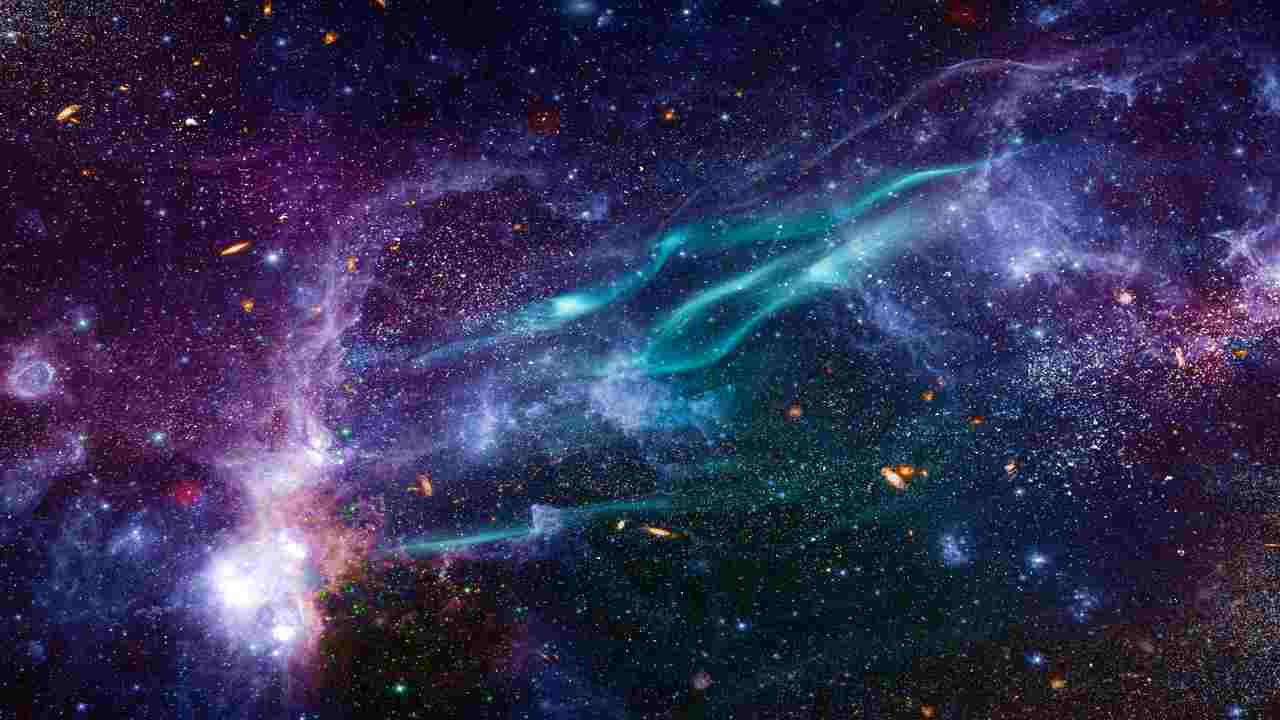
Galaxies are not scattered evenly through space—they gather in clusters, stretch into filaments, and leave vast empty regions between them. This immense pattern, revealed by decades of sky surveys and simulations, forms what scientists call the cosmic web.
It is the universe’s hidden skeleton: a vast network shaped by gravity, dark matter, and the expansion of space itself. Understanding this structure is essential for understanding how galaxies form, evolve, and connect across billions of light‑years.
A Structure Larger Than Any Galaxy
The cosmic web consists of three main components:
1. Filaments
Long, thread-like structures containing:
- Galaxies
- Hot gas
- Dark matterThese filaments can stretch tens to hundreds of millions of light‑years.
2. Void Regions
Enormous, nearly empty bubbles surrounded by filaments.Voids are some of the largest known structures in the universe.
3. Galaxy Clusters
Massive nodes where filaments intersect.These regions contain:
- Hundreds or thousands of galaxies
- Vast dark matter halos
- Extremely hot intracluster gasTogether, these components form a pattern resembling a three-dimensional web.
The Role of Dark Matter
Dark matter forms the backbone of the cosmic web.Even though dark matter cannot be seen, its gravitational influence pulls normal matter into patterns that shape galaxies and clusters.
How dark matter builds the web:
- It clumps together in the early universe
- Gravity strengthens these clumps
- Gas falls into dark matter wells
- Stars and galaxies form in these wells
- Clumps connect into filaments over timeDark matter filaments act like cosmic scaffolding.Normal matter simply fills in the structure.
How the Cosmic Web Formed After the Big Bang
Shortly after the universe’s birth, matter wasn’t evenly spread. Tiny density differences—smaller than a grain of sand—were imprinted on the early universe.Over billions of years:
- Denser regions pulled in more matter
- These regions grew into long threads
- Gravity connected clumps into chains
- Expansion stretched the largest structures
- Galaxies formed at the densest pointsSimulations like Millennium and Illustris show this process with remarkable accuracy, matching real observations.
How Scientists Map the Cosmic Web
The cosmic web isn’t fully visible with regular telescopes.Astronomers use several methods to chart its vast structure.
1. Redshift Surveys
By measuring galaxy distances using redshift, scientists create 3‑D maps of the universe.Famous surveys include:
- Sloan Digital Sky Survey (SDSS)
- 2dF Galaxy Redshift SurveyThese revealed the first large‑scale filaments and voids.
2. Gravitational Lensing
Dark matter bends light from distant galaxies.Mapping lensing distortions reveals hidden mass in filaments.
3. Hydrogen Absorption Lines
Distant quasars shine through cosmic filaments.Hydrogen gas leaves subtle absorption marks, showing where filaments lie.
4. X-ray and Radio Observations
Hot plasma in clusters and connecting bridges emits detectable signals, outlining the densest segments of the web.
What Lies in the Voids?
The vast, empty-looking voids are not completely empty.They contain:
- Sparse hydrogen gas
- A few faint galaxies
- Small dark matter halosBut compared to filaments, voids are strikingly empty—regions where galaxy formation struggled to take hold.Voids help scientists test theories about:
- Dark energy
- Cosmic expansion
- The behavior of gravity at large scalesEven emptiness holds scientific value.
Filaments as Galactic Highways
Galaxies tend to move along filaments over cosmic time.Filaments channel matter toward dense clusters, acting like intergalactic highways.
This process:
- Feeds galaxy clusters
- Triggers star formation when gas is compressed
- Influences galaxy spin and orientationThe cosmic web guides galaxy evolution on scales far larger than the galaxies themselves.
The Web Is Still Evolving
Even now, billions of years after the Big Bang, the cosmic web is changing.
Ongoing processes:
- Filaments grow thicker as matter accumulates
- Clusters merge into even larger structures
- Voids expand as mass flows outward
- Dark energy accelerates the separation of structuresThe web may be stretching, but gravity ensures its basic pattern persists.
The Universe’s Largest Known Structures
Some of the biggest cosmic structures discovered are parts of the web:
- Sloan Great Wall
- Hercules–Corona Borealis Great Wall
- Laniakea Supercluster (home of the Milky Way)
- Bootes VoidThese structures span hundreds of millions of light-years and reflect the immense scale of cosmic organization.
Why the Cosmic Web Matters
Studying the web helps scientists answer major questions:
- How do galaxies form and cluster?
- How does dark matter influence structure?
- How do cosmic voids evolve?
- What does the universe look like on the largest scales?
- How do gravity and dark energy compete over time?The web is a map of the universe’s history and future.
References
- Springel, V. et al. (2005). Simulations of the formation of the cosmic web.
- SDSS Collaboration – Three-dimensional cosmic structure maps
- Planck Collaboration – Dark matter distribution studies
- Illustris Simulation Project – Large-scale Universe modeling
More from Galaxies & Cosmic Structures
The Local Group: Our Galaxy’s Immediate Cosmic Neighborhood
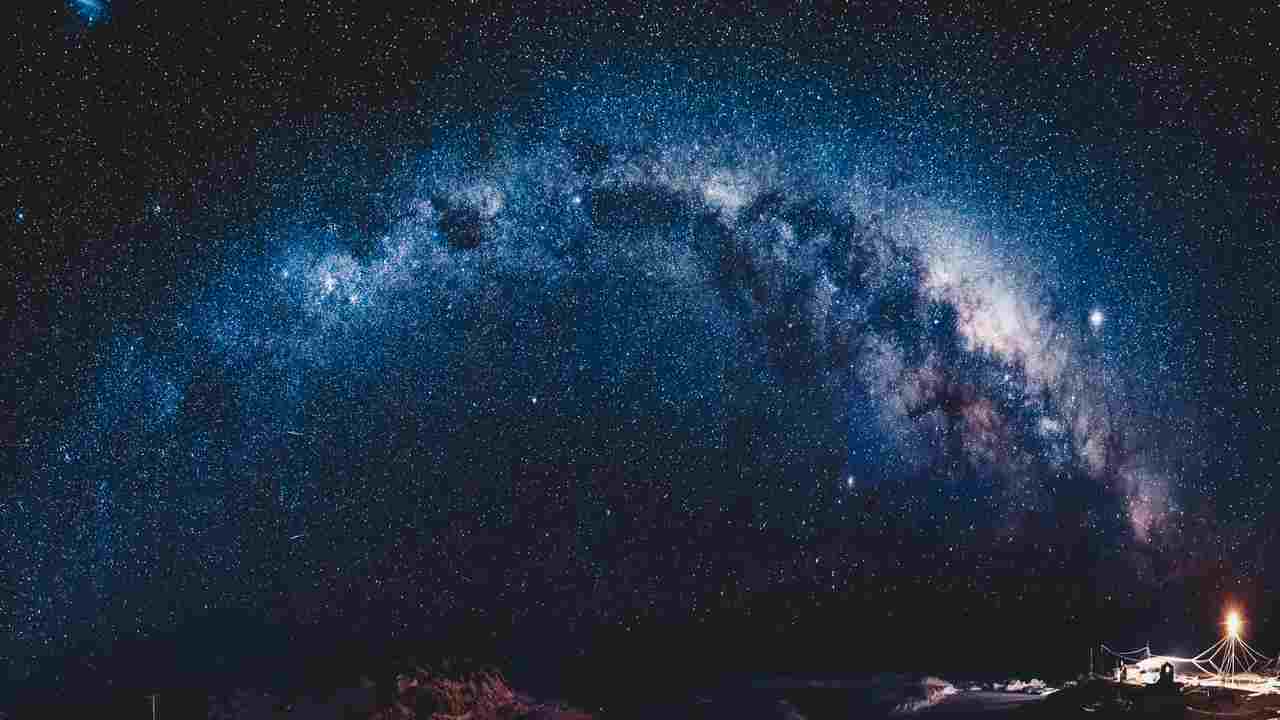
When we look up at the night sky, the Milky Way seems immense—an island of hundreds of billions of stars. But on a cosmic scale, our galaxy is far from alone. It belongs to a small cluster of galaxies known as the Local Group, a gravitationally bound community that stretches millions of light‑years across.
How Galaxy Collisions Give Birth to New Stars
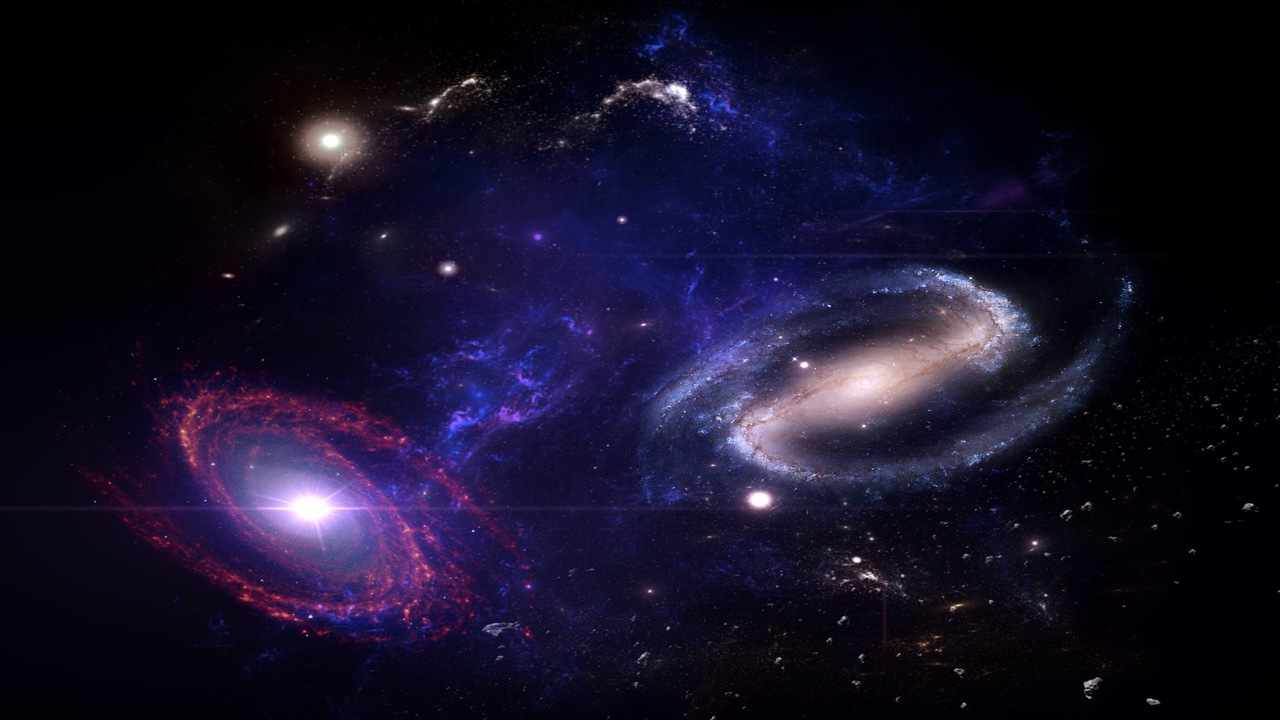
When two galaxies collide, the first image that comes to mind might be one of cosmic destruction—stars smashing into each other, planets shattering, and entire systems being torn apart. The truth is far more surprising: galaxy collisions are one of the universe’s most creative processes. Instead of destroying stars, collisions often trigger the birth of new ones.
Elliptical vs. Irregular Galaxies: What Makes Them Different?
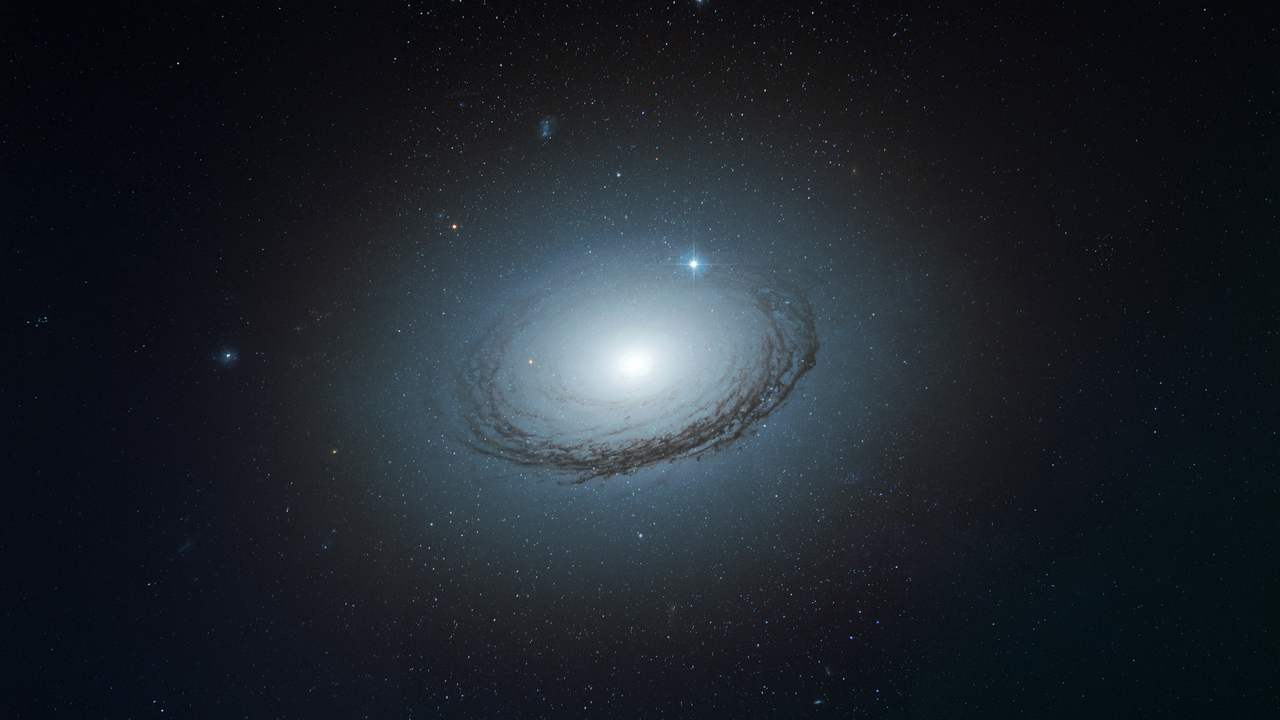
Not all galaxies follow the graceful swirl of a spiral. Some galaxies look like smooth, football‑shaped collections of stars. Others resemble chaotic clouds with no clear form at all. These two major types—elliptical and irregular galaxies—help astronomers understand how galaxies change over time and how different cosmic environments shape their evolution.
Explore More Topics
Gamma-Ray Bursts: The Universe’s Most Violent Explosions
Gamma-ray bursts (GRBs) are brief, powerful flashes of high-energy radiation that outshine entire galaxies for a few seconds. They occur randomly across the sky, often billions of light-years away, yet the energy they release is so intense that Earth-based detectors can pick them up instantly. These events push astrophysics to its limits and provide a rare glimpse into the universe’s most extreme processes.
What Happens Inside a Black Hole? Exploring the Unknown Interior
Black holes are among the most mysterious objects in the universe. While scientists understand how black holes form and how they interact with their surroundings, what happens inside a black hole remains one of the greatest unsolved mysteries in physics. Crossing the event horizon—the point of no return—takes you into a realm where spacetime is warped beyond recognition and where our current theories break down.
The Darkest Objects in the Universe: How We Detect Invisible Black Holes
Black holes are famous for being invisible. They emit no light, no radiation, and no signals that can be directly detected with traditional telescopes. Yet scientists have discovered dozens of them and mapped their behavior across the cosmos. How is this possible?