The Formation of Galaxies: From Big Bang to Today
The Formation of Galaxies: From Big Bang to Today
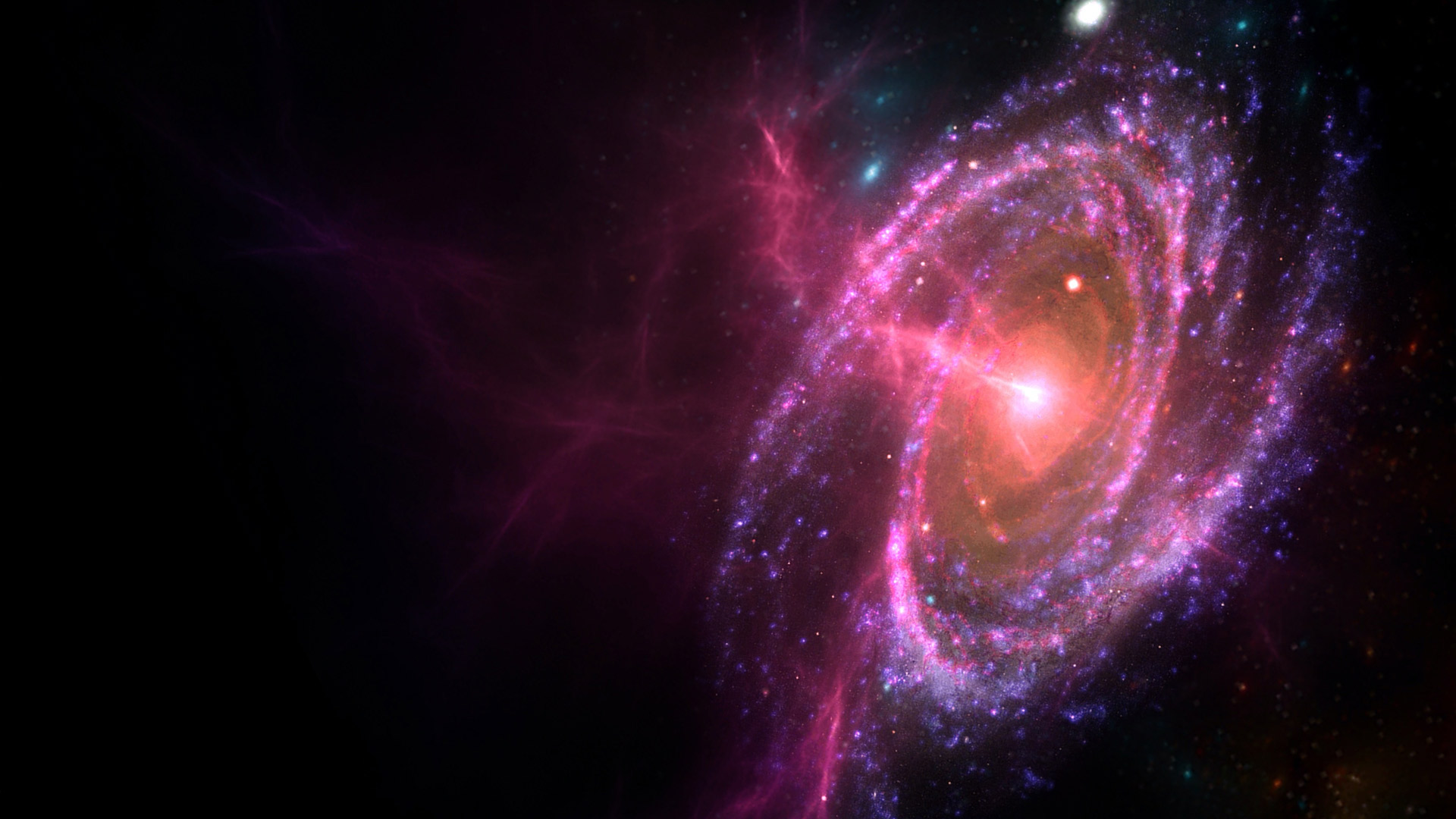
Galaxies are the fundamental building blocks of the universe, containing billions of stars, gas, dust, and dark matter. Understanding how galaxies formed and evolved from the earliest moments after the Big Bang to the present day is a central question in modern astrophysics. This article explores the key processes and scientific discoveries behind galaxy formation, explaining the timeline from the initial cosmic conditions to the diverse galactic structures we observe today.
The Big Bang and Early Universe Conditions
Approximately 13.8 billion years ago, the universe began with the Big Bang—a rapid expansion from an extremely hot and dense state. In the first few hundred thousand years, the universe was filled with a hot plasma of particles. As it expanded and cooled, protons and electrons combined to form neutral hydrogen atoms in a process called recombination, making the universe transparent to light for the first time.
During this early period, tiny fluctuations in the density of matter existed, caused by quantum effects during the inflationary epoch. These small irregularities acted as seeds for future structure formation, including galaxies.
Dark Matter: The Invisible Scaffold
One of the most crucial components in galaxy formation is dark matter. Unlike ordinary matter, dark matter does not emit, absorb, or reflect light, making it invisible to current instruments. However, its gravitational influence is fundamental.
Dark matter began to clump together under gravity shortly after the Big Bang, forming massive halos that provided the gravitational wells into which normal matter could fall. These halos served as the "scaffolding" for galaxy formation, determining where and how galaxies would develop.
Gas Cooling and Star Formation
As gas fell into dark matter halos, it began to cool and condense. Cooling is essential because hot gas resists collapse due to pressure. The cooling gas formed dense clouds where stars could be born.
Star formation within these clouds created the first generations of stars, known as Population III stars. These stars were massive, short-lived, and responsible for producing heavier elements through nuclear fusion and supernova explosions, enriching the surrounding gas.
The Birth of the First Galaxies
The first galaxies emerged roughly 400 million years after the Big Bang. They were smaller and less structured compared to modern galaxies but marked the beginning of organized cosmic systems.
Early galaxies were sites of intense star formation, producing ultraviolet light that eventually reionized the universe—transforming neutral hydrogen back into ionized plasma. This era, known as the Epoch of Reionization, is a major focus of current observational efforts.
Galaxy Growth Through Mergers and Accretion
Galaxies did not evolve in isolation. Over billions of years, smaller proto-galaxies merged to form larger systems in a hierarchical process known as galaxy merging. These collisions could trigger bursts of star formation and drastically alter galactic shapes.
Additionally, galaxies grew by accreting gas from the intergalactic medium, providing fresh material for new stars. This combination of mergers and gas accretion explains the wide variety of galaxy types and sizes seen today.
Types of Galaxies and Their Evolution
The major types of galaxies include spiral, elliptical, and irregular galaxies. Spiral galaxies, like our Milky Way, have well-defined rotating disks with spiral arms rich in gas and star formation. Elliptical galaxies are more spherical or ellipsoidal, generally containing older stars and less gas. Irregular galaxies lack a clear shape, often due to gravitational interactions.
Galaxy morphology can change over time due to environmental factors and internal processes, such as supernova feedback and black hole activity, influencing star formation and gas dynamics.
Observing Galaxy Formation
Astronomers use powerful telescopes across the electromagnetic spectrum to study galaxies at various distances. Observing distant galaxies allows scientists to look back in time, as the light from these objects took billions of years to reach Earth.
Recent missions like the Hubble Space Telescope and the James Webb Space Telescope (JWST) have provided unprecedented views of early galaxies, revealing details about their formation, structure, and composition.
Current Challenges and Future Research
While the broad picture of galaxy formation is understood, many details remain uncertain. The exact nature of dark matter, the role of feedback from stars and black holes, and the influence of cosmic environment are active research areas.
Future telescopes and simulations aim to refine models and answer fundamental questions about how the complex structures we see today originated from simple early conditions.
Understanding the formation of galaxies from the Big Bang to today is a journey through cosmic history. It connects the invisible forces of dark matter, the birth of stars, and the grand collisions of galaxies, painting a dynamic picture of an evolving universe.
More from Galaxies & Cosmic Structures
The Local Group: Our Galaxy’s Immediate Cosmic Neighborhood
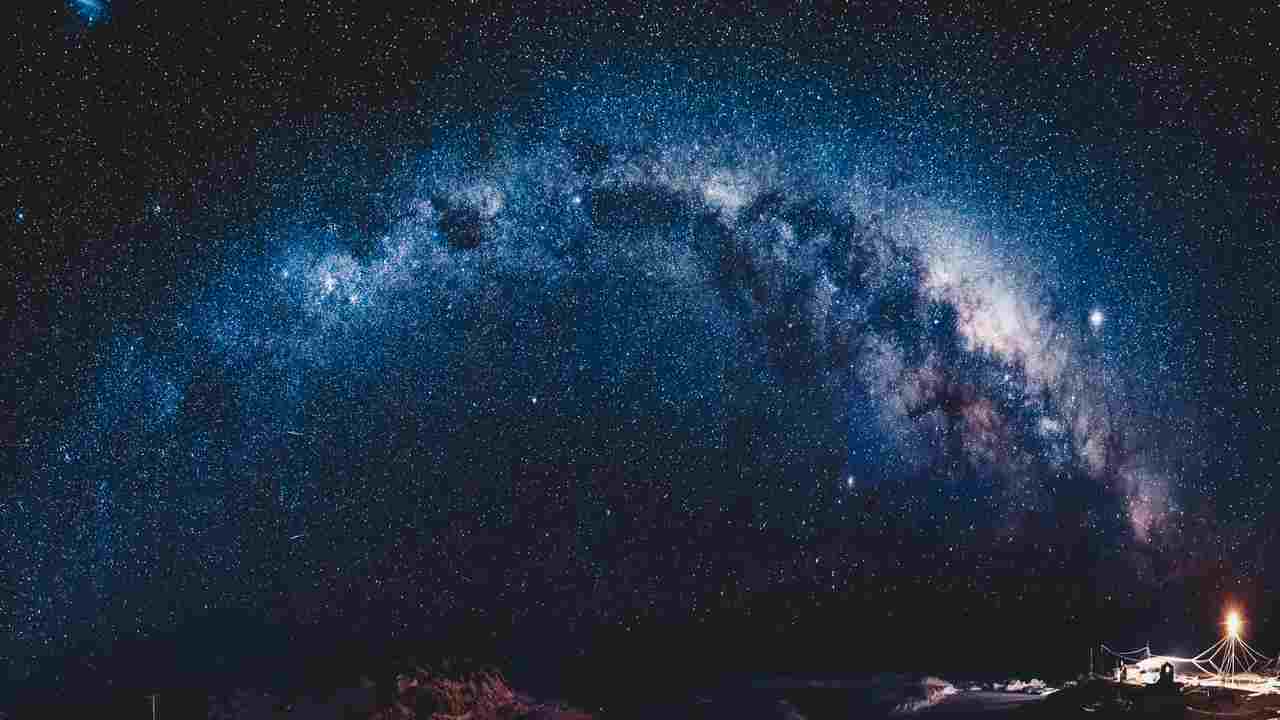
When we look up at the night sky, the Milky Way seems immense—an island of hundreds of billions of stars. But on a cosmic scale, our galaxy is far from alone. It belongs to a small cluster of galaxies known as the Local Group, a gravitationally bound community that stretches millions of light‑years across.
How Galaxy Collisions Give Birth to New Stars
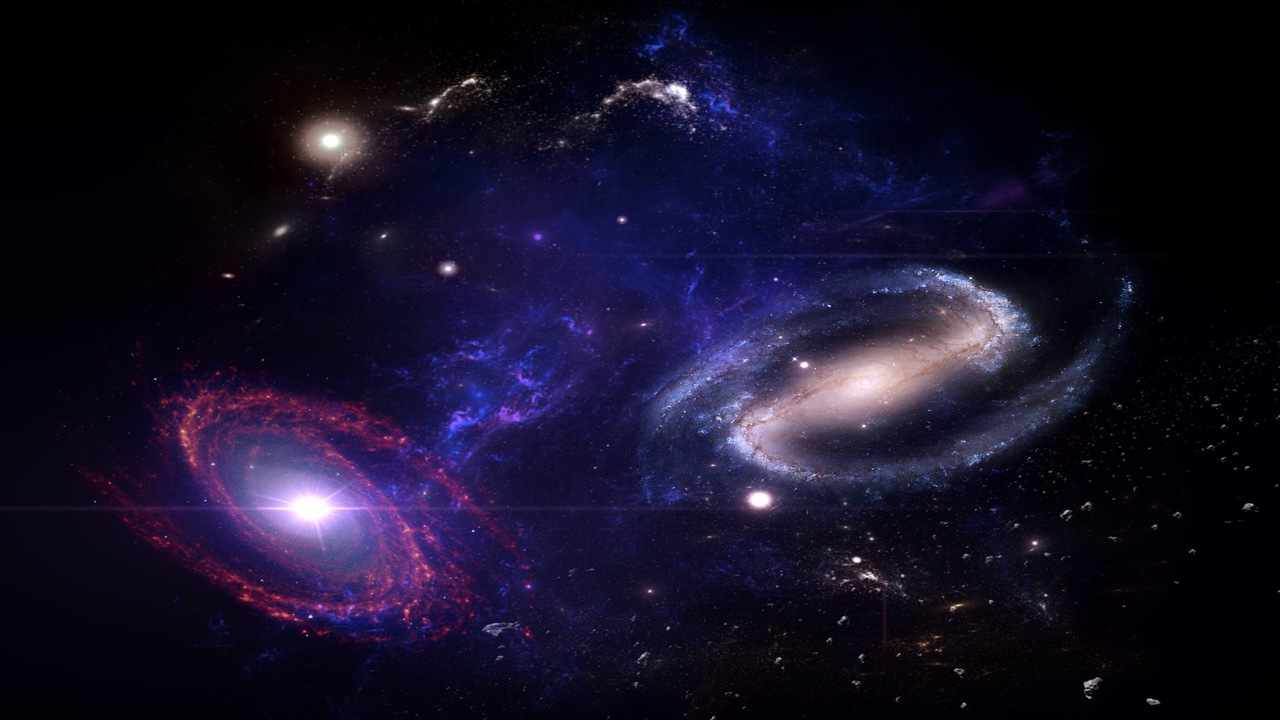
When two galaxies collide, the first image that comes to mind might be one of cosmic destruction—stars smashing into each other, planets shattering, and entire systems being torn apart. The truth is far more surprising: galaxy collisions are one of the universe’s most creative processes. Instead of destroying stars, collisions often trigger the birth of new ones.
Cosmic Web: The Hidden Skeleton of the Universe
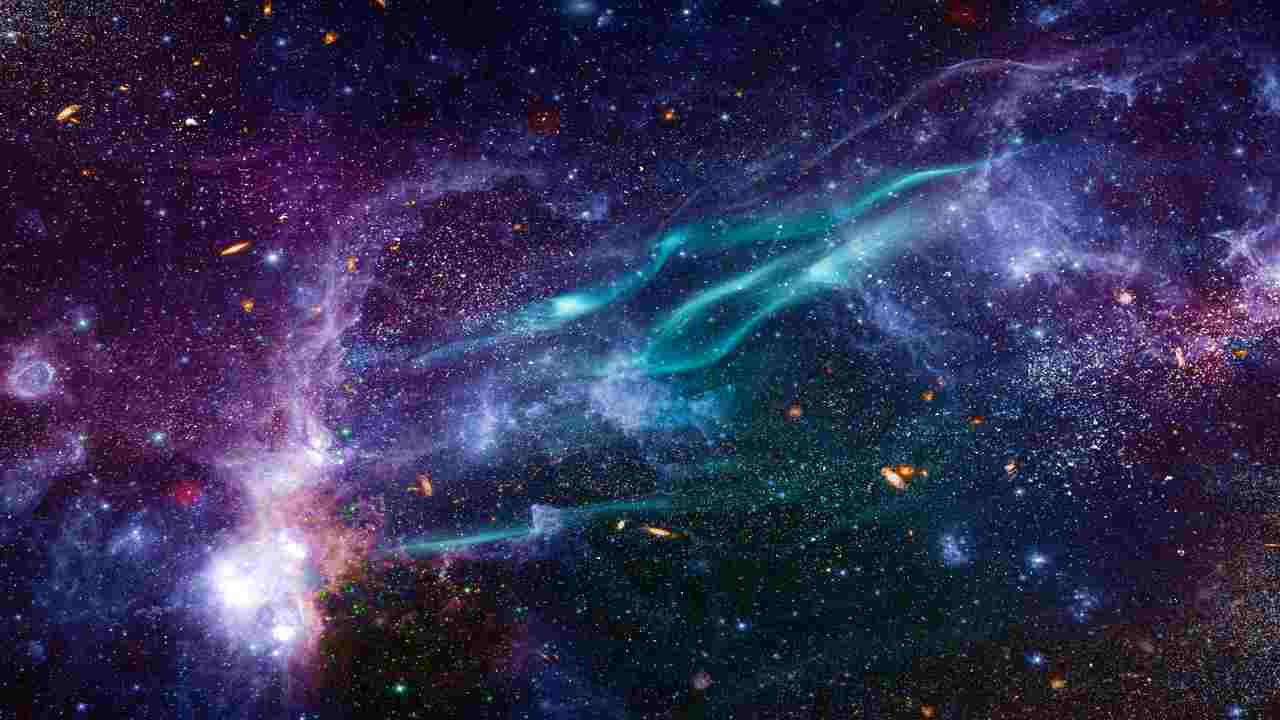
On the largest scales, the universe does not look random.It is the universe’s hidden skeleton: a vast network shaped by gravity, dark matter, and the expansion of space itself. Understanding this structure is essential for understanding how galaxies form, evolve, and connect across billions of light‑years.
Explore More Topics
Gamma-Ray Bursts: The Universe’s Most Violent Explosions
Gamma-ray bursts (GRBs) are brief, powerful flashes of high-energy radiation that outshine entire galaxies for a few seconds. They occur randomly across the sky, often billions of light-years away, yet the energy they release is so intense that Earth-based detectors can pick them up instantly. These events push astrophysics to its limits and provide a rare glimpse into the universe’s most extreme processes.
What Happens Inside a Black Hole? Exploring the Unknown Interior
Black holes are among the most mysterious objects in the universe. While scientists understand how black holes form and how they interact with their surroundings, what happens inside a black hole remains one of the greatest unsolved mysteries in physics. Crossing the event horizon—the point of no return—takes you into a realm where spacetime is warped beyond recognition and where our current theories break down.
The Darkest Objects in the Universe: How We Detect Invisible Black Holes
Black holes are famous for being invisible. They emit no light, no radiation, and no signals that can be directly detected with traditional telescopes. Yet scientists have discovered dozens of them and mapped their behavior across the cosmos. How is this possible?