How Supermassive Black Holes Shape Galactic Centers
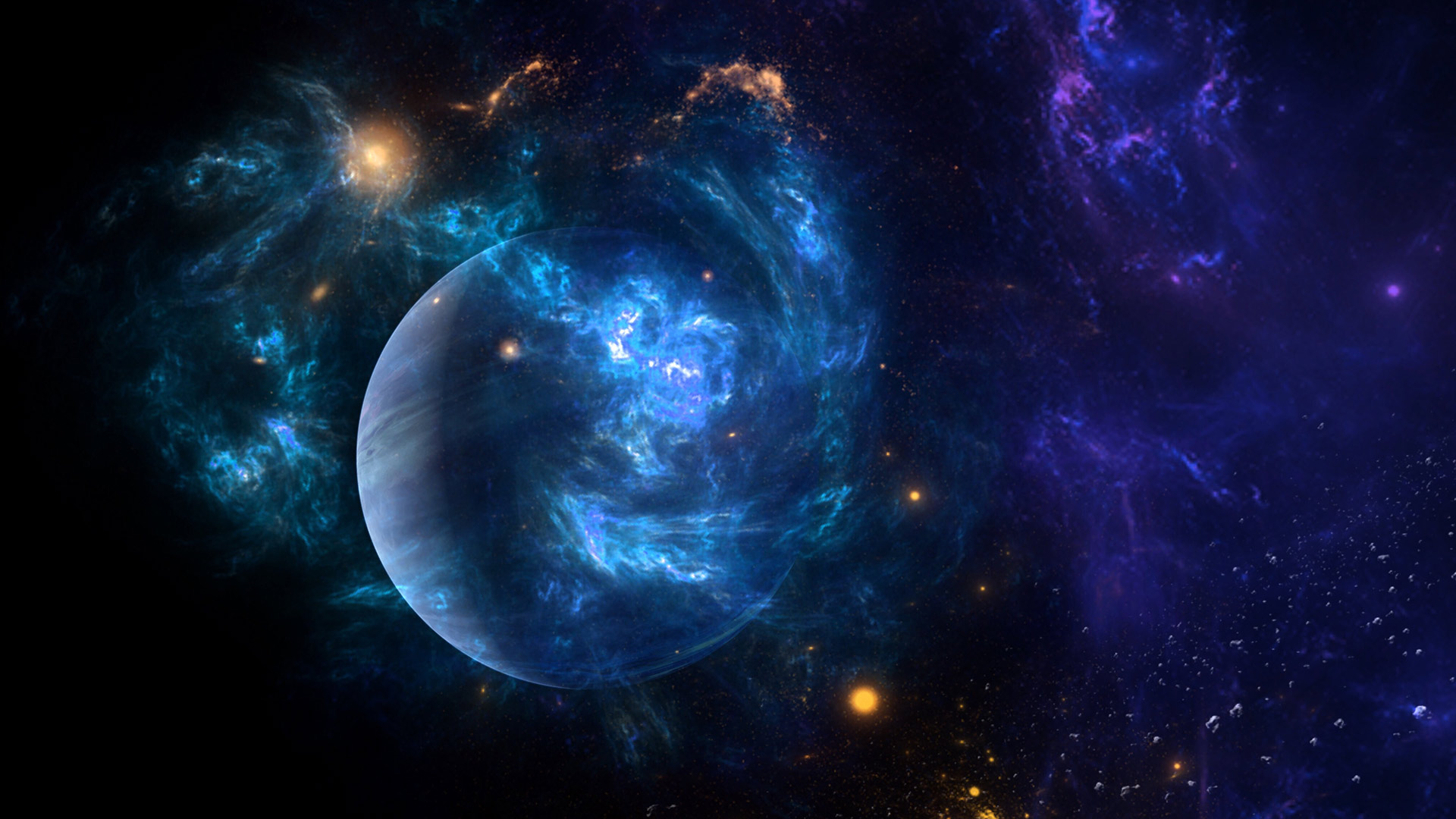
How Supermassive Black Holes Shape Galactic Centers
Supermassive black holes (SMBHs) are some of the most fascinating and powerful objects in the universe. Found at the centers of most galaxies, including our own Milky Way, these black holes have masses ranging from millions to billions of times that of our Sun. Their immense gravity and energetic influence play a crucial role in shaping the structure and evolution of galactic centers. This article explores the nature of supermassive black holes, their formation, and how they impact their host galaxies, particularly the central regions.
What Are Supermassive Black Holes?
A black hole is a region in space where gravity is so strong that nothing—not even light—can escape. Supermassive black holes differ from stellar-mass black holes by their enormous mass. While stellar black holes form from the collapse of massive stars, SMBHs occupy the cores of galaxies and can be billions of times more massive than the Sun.
The presence of SMBHs was first inferred from the motion of stars and gas near galactic centers, where velocities indicated the gravitational pull of an invisible, extremely massive object. Today, observations from telescopes across multiple wavelengths provide strong evidence of SMBHs, such as the detection of accretion disks and relativistic jets.
Formation of Supermassive Black Holes
The exact process by which SMBHs form remains a subject of active research. Several theories exist:
Direct Collapse: Massive gas clouds in the early universe may have collapsed directly to form black holes with masses of thousands to millions of solar masses.
Growth from Stellar-Mass Black Holes: Smaller black holes formed by dying stars could grow over billions of years by accreting gas and merging with other black holes.
Seed Black Holes from Population III Stars: The first generation of massive stars (Population III) might have left behind black hole remnants that served as seeds for SMBHs.
Regardless of their origins, SMBHs grow by accreting matter from their surroundings, often forming a hot, bright accretion disk of infalling gas.
The Role of SMBHs in Galactic Centers
SMBHs significantly influence the dynamics, structure, and evolution of the central regions of galaxies in several ways:
Gravitational Influence on Stars and Gas
The immense gravity of a SMBH governs the orbits of stars and gas clouds near the galactic center. For example, in the Milky Way, observations of stars orbiting Sagittarius A* — the SMBH at our galaxy's core — have provided precise measurements of its mass, about 4 million times that of the Sun.
This gravitational dominance creates a dense stellar environment called the nuclear star cluster. The dynamics within this cluster affect star formation and the distribution of matter.
Accretion and Energy Output
When gas falls toward the SMBH, it forms an accretion disk that heats up due to friction and gravitational forces, emitting intense radiation across the electromagnetic spectrum. This process powers some of the brightest objects in the universe, such as quasars and active galactic nuclei (AGN).
The energy released can heat or expel surrounding gas, regulating star formation in the galaxy's central region. This feedback mechanism is crucial in controlling the growth of both the SMBH and its host galaxy.
Jets and Outflows
Some SMBHs launch relativistic jets—narrow beams of charged particles traveling near the speed of light—that can extend thousands of light-years beyond the galaxy. These jets inject energy into the interstellar medium, affecting gas cooling and star formation on large scales.
Jets and outflows can clear gas from the galactic center or compress it to trigger star formation, influencing the galactic ecosystem.
Observational Evidence of SMBH Influence
Modern telescopes have revealed several signatures of SMBH activity:
Stellar Motions: Tracking stars near galactic centers shows the presence and mass of SMBHs.
X-ray and Radio Emission: High-energy radiation from accretion disks and jets reveals active SMBHs.
Galaxy-Scale Correlations: Observations indicate a tight relationship between SMBH mass and properties of the host galaxy’s bulge, such as velocity dispersion (the M–sigma relation), suggesting co-evolution.
SMBHs and Galaxy Evolution
The interplay between SMBHs and their galaxies is a key factor in cosmic evolution. Feedback from SMBHs can quench star formation by heating or expelling gas, shaping the size and morphology of galaxies.
In massive galaxies, SMBHs may regulate the growth of elliptical galaxies, while in smaller galaxies, their impact may be less pronounced. Understanding this relationship helps explain the observed diversity in galaxy types.
Challenges and Future Research
Despite progress, many questions remain:
How did SMBHs grow so rapidly in the early universe?
What exactly triggers transitions between active and quiet phases?
How do SMBHs influence galaxy formation across different environments?
Upcoming instruments like the Extremely Large Telescope (ELT) and next-generation space observatories will provide deeper insights by observing SMBHs at earlier cosmic times and in greater detail.
Supermassive black holes are more than cosmic curiosities; they are dynamic engines shaping the hearts of galaxies. By studying their properties and interactions, astronomers gain vital understanding of galaxy formation, evolution, and the universe’s grand architecture.
More from Galaxies & Cosmic Structures
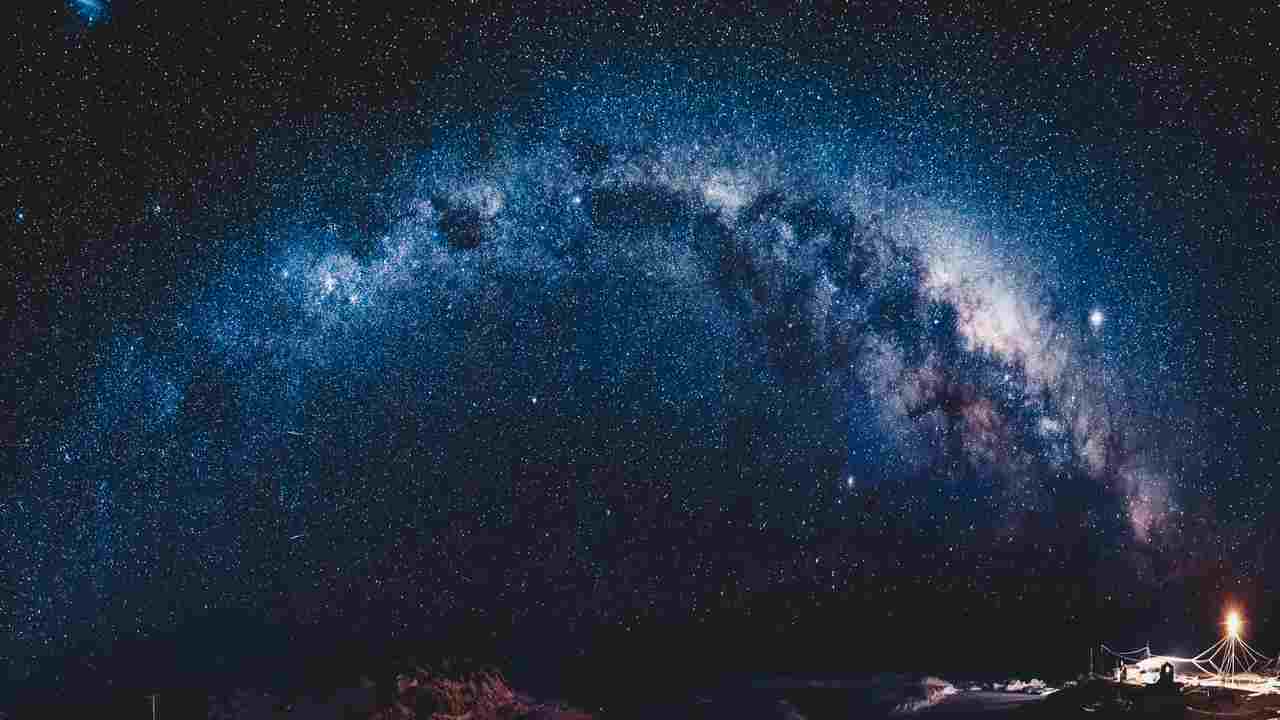
The Local Group: Our Galaxy’s Immediate Cosmic Neighborhood
When we look up at the night sky, the Milky Way seems immense—an island of hundreds of billions of stars. But on a cosmic scale, our galaxy is far from alone. It belongs to a small cluster of galaxies known as the Local Group, a gravitationally bound community that stretches millions of light‑years across.
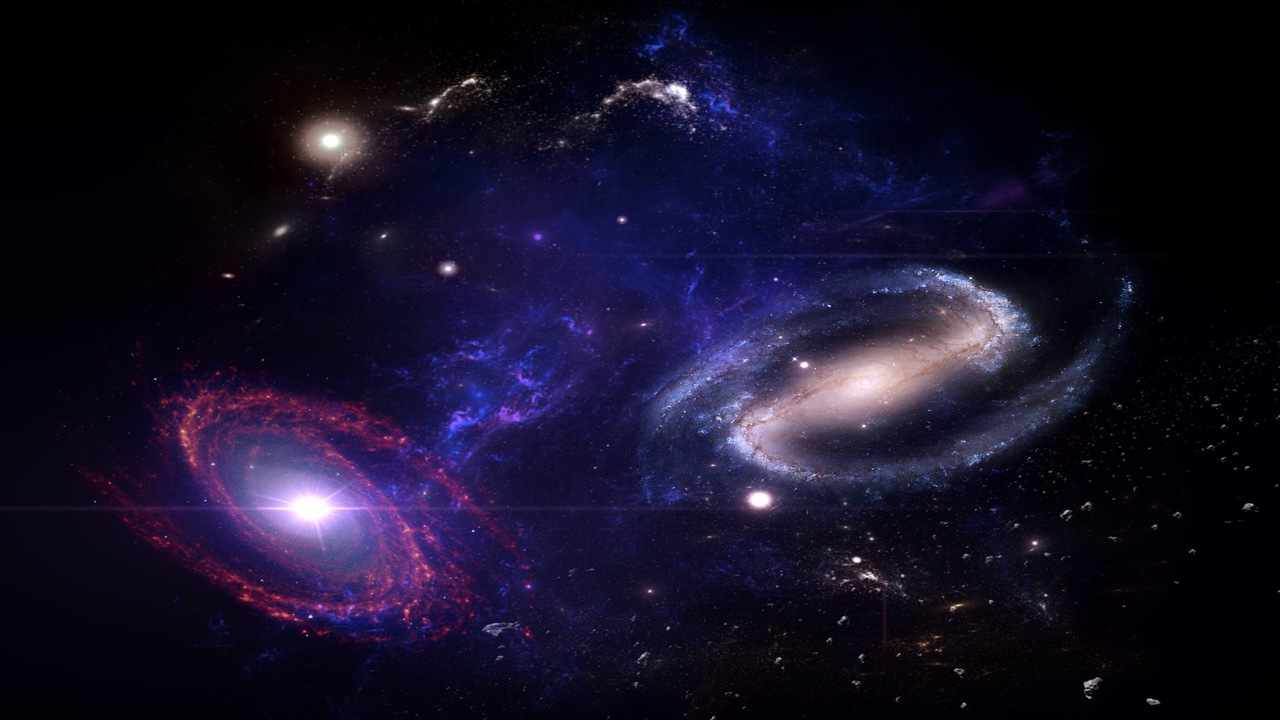
How Galaxy Collisions Give Birth to New Stars
When two galaxies collide, the first image that comes to mind might be one of cosmic destruction—stars smashing into each other, planets shattering, and entire systems being torn apart. The truth is far more surprising: galaxy collisions are one of the universe’s most creative processes. Instead of destroying stars, collisions often trigger the birth of new ones.
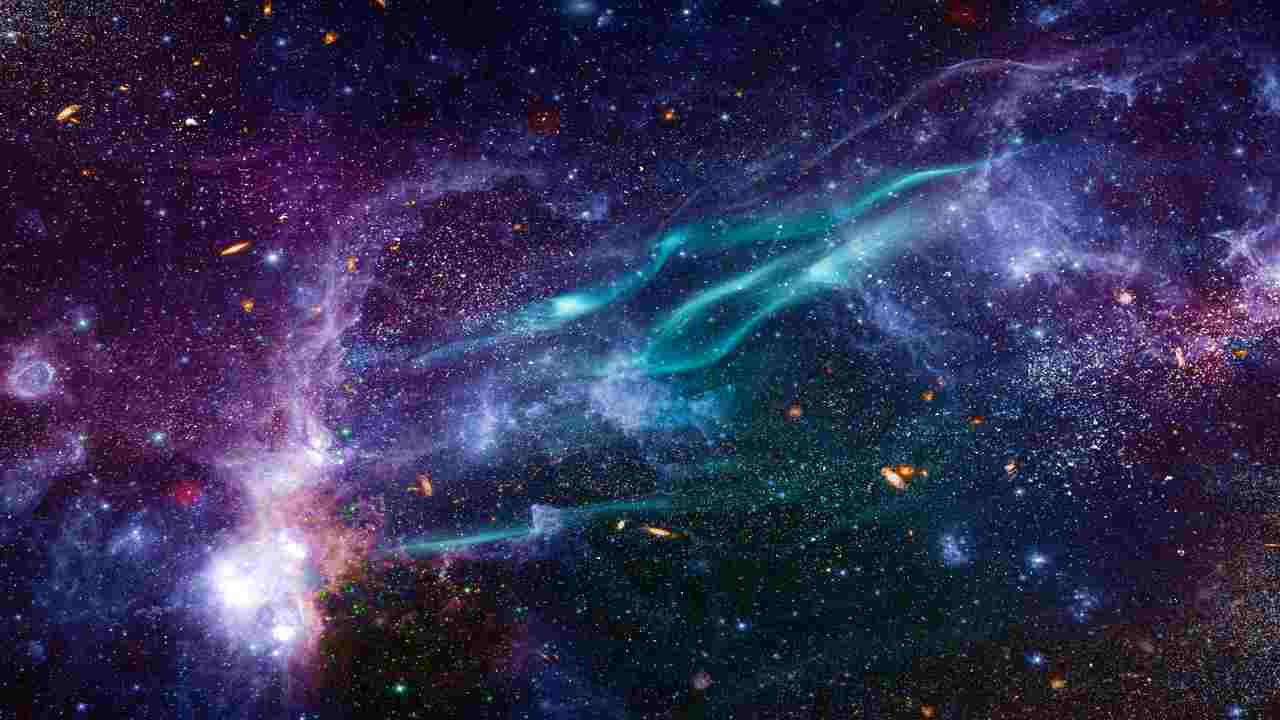
Cosmic Web: The Hidden Skeleton of the Universe
On the largest scales, the universe does not look random.It is the universe’s hidden skeleton: a vast network shaped by gravity, dark matter, and the expansion of space itself. Understanding this structure is essential for understanding how galaxies form, evolve, and connect across billions of light‑years.
Explore More Topics
Gamma-Ray Bursts: The Universe’s Most Violent Explosions
Gamma-ray bursts (GRBs) are brief, powerful flashes of high-energy radiation that outshine entire galaxies for a few seconds. They occur randomly across the sky, often billions of light-years away, yet the energy they release is so intense that Earth-based detectors can pick them up instantly. These events push astrophysics to its limits and provide a rare glimpse into the universe’s most extreme processes.
What Happens Inside a Black Hole? Exploring the Unknown Interior
Black holes are among the most mysterious objects in the universe. While scientists understand how black holes form and how they interact with their surroundings, what happens inside a black hole remains one of the greatest unsolved mysteries in physics. Crossing the event horizon—the point of no return—takes you into a realm where spacetime is warped beyond recognition and where our current theories break down.
The Darkest Objects in the Universe: How We Detect Invisible Black Holes
Black holes are famous for being invisible. They emit no light, no radiation, and no signals that can be directly detected with traditional telescopes. Yet scientists have discovered dozens of them and mapped their behavior across the cosmos. How is this possible?