Quantum Fluctuations: How Tiny Ripples Shaped the Big Bang
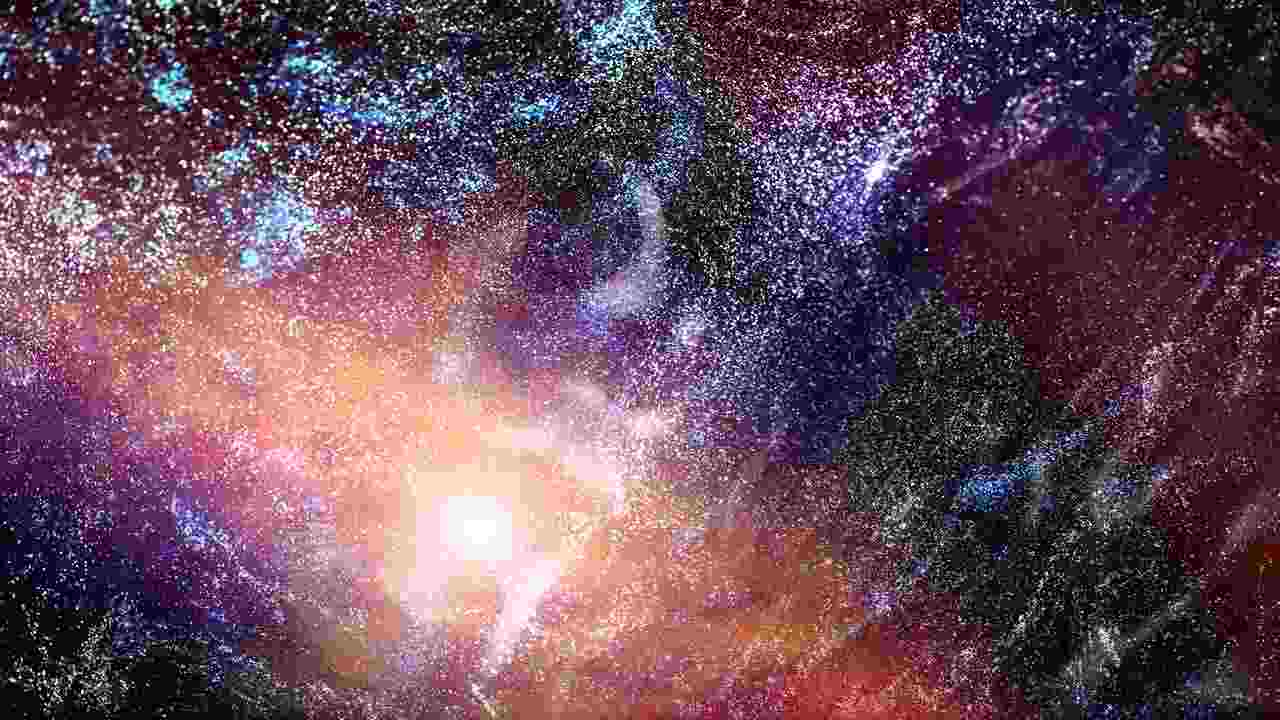
The universe today is filled with galaxies, stars, planets, and massive cosmic structures stretching across billions of light‑years. Yet according to modern cosmology, all of this complexity traces back to something almost unbelievably small: tiny quantum fluctuations that existed in the earliest fractions of a second after the Big Bang.
These microscopic ripples—born from randomness itself—became the seeds of everything we see today. Understanding them helps explain why galaxies formed where they did, why the cosmic web looks the way it does, and how the universe transformed from nearly uniform to richly structured.
What Are Quantum Fluctuations?
In quantum physics, empty space is never truly empty. Even in a perfect vacuum:
- Particle–antiparticle pairs spontaneously appear and disappear
- Energy levels fluctuate
- Space “vibrates” with tiny variationsThese momentary changes are called quantum fluctuations. Under normal conditions, they are unimaginably small and short‑lived. But in the early universe, something extraordinary happened to them.
Inflation: The Amplifier of Everything
Right after the Big Bang, the universe underwent a phase of rapid expansion known as cosmic inflation.During inflation:
- The universe doubled in size repeatedly in trillionths of a second
- Quantum fluctuations were stretched to cosmic scales
- Microscopic differences in energy density became macroscopicWhat started as subatomic ripples were blown up to become density variations across regions of space larger than entire galaxies.
Why this matters:
These variations determined:
- Where galaxies would eventually form
- Which regions would collapse under gravity
- How matter spread throughout the early universeInflation is the bridge between the quantum world and cosmic structure.
Fluctuations as the Blueprint of the Universe
Quantum fluctuations became density fluctuations—tiny differences in matter distribution.
Regions with slightly higher density:
- Pulled in more matter
- Grew into galaxies and clusters
- Became homes for stars and planets
Regions with slightly lower density:
- Became cosmic voids
- Expanded more rapidly
- Contain few galaxies todayThe entire cosmic web is essentially a magnified map of fluctuations from the infant universe.
Evidence in the Cosmic Microwave Background
The strongest observational evidence for early quantum fluctuations comes from the cosmic microwave background (CMB)—the faint afterglow of the Big Bang.Satellite missions such as:
- COBE
- WMAP
- Planckmapped tiny temperature differences across the sky. These differences—only a few millionths of a degree—perfectly match predictions from inflation and quantum fluctuation theory.The CMB acts like a baby picture of the universe, showing the exact patterns of density variations that later became galaxies.
How Fluctuations Became Structure
Once inflation ended, the universe expanded more slowly, allowing gravity to take over.
The transformation went like this:
- Tiny fluctuations → small density differences
- Gravity amplified denser regions
- Gas accumulated in these regions
- Stars formed
- Galaxies developed
- Filaments and clusters emergedThe complexity of the modern universe came from random quantum noise amplified at cosmic scales.
Quantum Fluctuations and Dark Matter
Dark matter played a key role in turning early fluctuations into galaxies.Because dark matter:
- Interacts mainly through gravity
- Does not collide or heat up like normal matterIt collapsed rapidly into dense halos. These halos became gravitational anchors for galaxy formation.Quantum fluctuations determined:
- Where dark matter halos first formed
- How massive they became
- How early galaxies assembledDark matter essentially “read” the fluctuation pattern and formed structure around it.
The Scale‑Invariance of Fluctuations
One of the remarkable features of quantum fluctuations is that they produce scale‑invariant patterns.This means:
- Small fluctuations and large fluctuations follow similar distribution rules
- The universe’s structure looks statistically similar at different scales
- The cosmic web has a fractal‑like qualityThis property is a key prediction of inflation, confirmed by observations.
Do Quantum Fluctuations Mean the Universe Came From Nothing?
Some interpretations suggest the entire universe could have emerged from a quantum fluctuation in a vacuum-like state.However:
- This idea is philosophical as much as scientific
- It depends on how one defines “nothing”
- Quantum physics allows spontaneous creation of energy under certain rulesWhat matters scientifically is that quantum fluctuations clearly shaped the earliest moments of the universe.
Why Quantum Fluctuations Still Matter Today
Even though inflation occurred nearly 14 billion years ago, its fingerprints remain everywhere.They influence:
- Galaxy distribution
- Cosmic microwave background patterns
- The formation of large-scale cosmic structures
- The physics of the early universe
- Models of dark matter and dark energyIn modern cosmology, quantum fluctuations act as the foundation of cosmic architecture.
Looking Ahead: Future Observations
Upcoming observatories aim to measure early-universe fluctuations with unprecedented precision:
- The Simons Observatory
- CMB‑S4
- Euclid
- The Rubin ObservatoryThese missions may reveal:
- New details about inflation
- Whether multiple inflation events occurred
- How quantum noise shaped dark matter
- Signs of exotic early‑universe physicsThe next decade may rewrite parts of the inflationary story.
More from Big Bang & the Expanding Universe
The First Galaxies: How Did They Form After the Big Bang?
Billions of galaxies fill the modern universe, from elegant spirals to giant ellipticals stretching across hundreds of thousands of light‑years. But the very first galaxies were nothing like these enormous systems. They were tiny, turbulent, fast‑changing structures that emerged from a universe still settling after the Big Bang.
Reionization: How the First Stars Transformed the Universe
Long before galaxies took their modern shapes and long before the Milky Way existed, the universe went through one of its most dramatic transformations. It began in darkness, filled with neutral hydrogen stretching across billions of light‑years. Then the first stars appeared—brilliant, massive, short‑lived giants.
What Triggered the First Stars to Ignite in the Early Universe?
Before the first stars formed, the universe was a dark, silent expanse. There were no galaxies, no planets, and no light—only vast clouds of hydrogen and helium drifting through space. This period, known as the Cosmic Dark Ages, lasted for nearly 100 million years after the Big Bang.
Explore More Topics
Gamma-Ray Bursts: The Universe’s Most Violent Explosions
Gamma-ray bursts (GRBs) are brief, powerful flashes of high-energy radiation that outshine entire galaxies for a few seconds. They occur randomly across the sky, often billions of light-years away, yet the energy they release is so intense that Earth-based detectors can pick them up instantly. These events push astrophysics to its limits and provide a rare glimpse into the universe’s most extreme processes.
What Happens Inside a Black Hole? Exploring the Unknown Interior
Black holes are among the most mysterious objects in the universe. While scientists understand how black holes form and how they interact with their surroundings, what happens inside a black hole remains one of the greatest unsolved mysteries in physics. Crossing the event horizon—the point of no return—takes you into a realm where spacetime is warped beyond recognition and where our current theories break down.
The Darkest Objects in the Universe: How We Detect Invisible Black Holes
Black holes are famous for being invisible. They emit no light, no radiation, and no signals that can be directly detected with traditional telescopes. Yet scientists have discovered dozens of them and mapped their behavior across the cosmos. How is this possible?